
Rwanda’s Akagera National Park is a phenomenal Safari destination for unforgettable game viewing experience. Famous for its Big Five Game and other wildlife species, which are fed by the mighty Kagera River and Lake Ihema. It is therefore not an overstatement to say that the Protected Area is a haven for a jaw-dropping concentration of land and aquatic wildlife species. Whether you are planning an Akagera day trip from Kigali, as a multi-day visit alone, or including it on a longer journey through Rwanda, this incredible, stellar National Park promises some of the best wildlife viewing of your Rwanda safari.
Where is Akagera National Park located?
Akagera National Park is tucked away on the eastern side of Rwanda, close to the Tanzania border, and enjoys a strategic location with breathtaking views of the savannah plains. With a size of 112,200 hectares, Akagera National Park is the largest Protected Area in Rwanda.
Gazetted in 1934, this savanna and wetland-protected area is the second-oldest National Park in Rwanda after Volcanoes National Park, which has been in existence since the 1920s.
The Park’s unique landscape, marked by sweeping savannah grasslands, a network of wetlands, small lakes, Valleys, and woodlands, together with its location, makes it very easy to access (just 3 hours’ drive).
When it comes to altitude, Akagera National Park sits in an area with varying terrains, ranging from 1220 meters along the Kagera River Valley to 2000 meters in the Mutumba Hills. Combining wildlife viewing and scenic viewing provides magnificent views of the scenic Lakes and Papyrus swamps in the Eastern end of Akagera National Park.
Why should you visit Akagera National Park?
If the Big Five Game is big on your safari bucket list, there is no better place in Rwanda to visit. There is more to Akagera National Park than you can imagine, as you will discover. Here are some of the reasons you might want to pin this Protected Area on your map.
Wildlife is incredibly diverse.
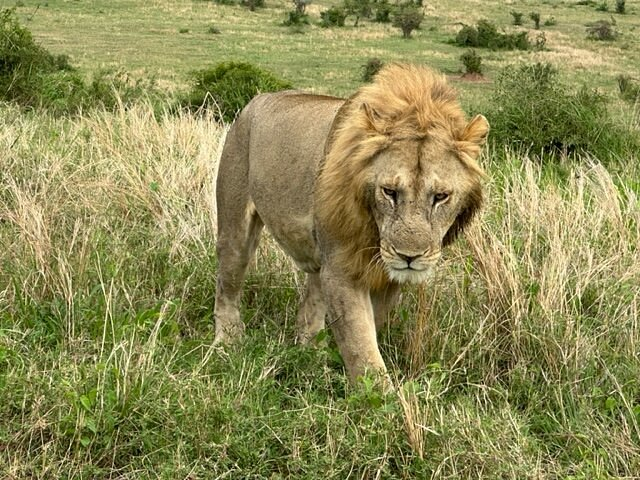
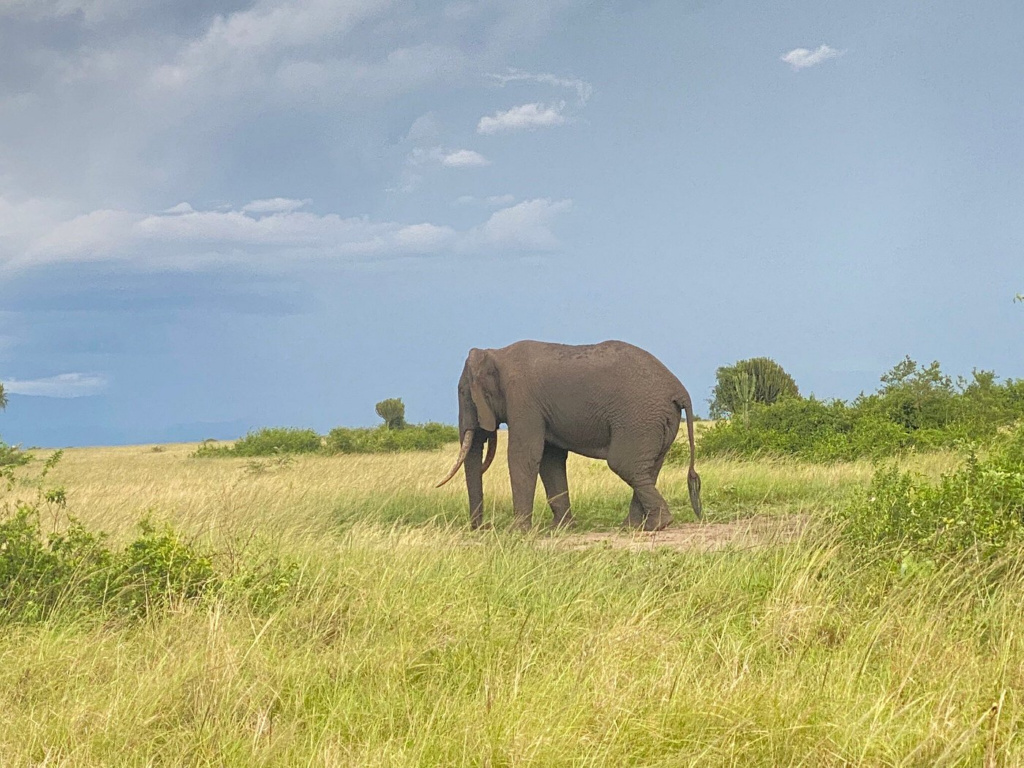
Akagera hosts an impressive array of wildlife, from the Big 5 game species- Black and white Rhinos, African bush elephants, leopards, Lions, and Cape buffaloes, to primates and antelopes. Expect sights and sounds of Burchell’s zebras, Masai giraffes, hippos, Defassa waterbucks, Olive baboons, spotted hyenas, bush babies, bushbucks, Giant elands, blue monkeys, bush babies, vervet monkeys, duikers, impalas, klipspringers, Topis, and Oribis, among others.
World-class Birding
With over 500 bird species, Akagera National Park is a birdwatcher’s dream. The Protected Area offers outstanding year-round birding opportunities, with chances to see African fish eagles, black-headed weaver birds, grasshopper buzzard, cattle egrets, blue-shouldered robin-chat, Augur buzzards, the sooty chat, papyrus gonoleks, monarch flycatchers, shoebill storks, white browed coucal, black-crowned night heron, Shelley’s francolins, long-toed birds, brown-chested lapwing, semi-collared flycatchers, slate-colored boubou, and more.
What types of safari experiences are available in Akagera National Park?
Akagera National Park offers a variety of safari experiences that include;
Game drives
Undertaken in open 4X4 Safari vehicles, game drives are the classic way to explore Akagera National Park’s diverse ecosystems. Early morning and late afternoon game drives maximize game viewing, with once-in-a-lifetime opportunities to large herds of Cape buffaloes, African bush elephants, Topis, impalas, prides of lions, leopards, Masai giraffes, Black and white rhinos, spotted hyenas, Defassa waterbucks, serval cats, Olive baboons, blue monkeys, and more.
The dry months are gratifying as wildlife converge near waterholes, hence providing unforgettable game drive experiences.
Boat safaris
Unlike traditional game drives, boat safaris offer closer encounters with Hippos, crocodiles, Masai giraffes, Cape buffaloes, African bush elephants, and antelopes cooling off in the water.
Lake Ihema Boat safaris are so far one of its most enticing calling cards and last 1-2 hours. Bird spotting chances are also phenomenal during boat safaris, from papyrus gonoleks, black-headed weaver birds, brown-chested lapwing, African fish eagles, double-toothed barbet, to slate-colored boubou, red-faced barbets, and even Shelley’s francolins.
Birding safaris
Bird safaris in Akagera National Park are among the most popular activities. You can spot lots of bird species through bush walks, boat safaris, or game drives. Different ecosystems shelter a variety of birdlife, such as cattle egrets, blue-shouldered robin-chat, Augur buzzards, the sooty chat, papyrus gonoleks, monarch flycatchers, shoebill storks, white browed coucal, black-crowned night heron, and Shelley’s francolins, making birding safaris one of the unmissable activities for photographers.
Sport fishing safaris
Akagera National Park also offers sport fishing, which is done in Lake Shakani. The commonly-caught species are Nile Perch, Catfish, and Nile tilapia. Before you undertake this adventure, you will be required to acquire fishing gear and permits.
Walking safaris
These adventures should be done in the company of armed Ranger guides for safety reasons (especially from stray animals). Walking safaris in Akagera National Park provide an intimate experience of the bush, allowing visitors to learn about plants, animal tracks, as well as the different ecosystems of Akagera National Park.
Behind-the-scene safaris
Akagera National Park provides a special program, referred to as the “behind-the-scenes tour”, with an aim of introducing you to the Protected Area’s wildlife and nature conservation journey. Here, experts/Ranger guides provide detailed information on the rehabilitation techniques that are used on different wildlife species.
Hot Air Balloon safaris
For a tranquil aerial perspective on the wilderness, take part in an Akagera National Park hot air balloon tour. You can choose an early morning or evening tour over the Park to see herds of mammals, with an opportunity of dropping down to near ground level to enjoy an intimate view. The backdrop is the phenomenal view of the rolling hills, Lakes, and other ecosystems.
When is the best time of the year to visit Akagera?
The perfect time for an Akagera safari experience is the dry season, between June and October.
The dry season in Rwanda and Akagera National Park in particular brings clear skies, sparser vegetation, and hence animals congregate around waterholes. This makes spotting them much easier. You can choose to stay in a Lodge like Ruzizi Tented Camp or Magashi Camp, and you could be sipping a sundowner and watching a plethora of wildlife come to shore to drink- one of Akagera National Park’s most unforgettable experiences.
During the dry season, days are comfortably warm, but mornings are evenings can be chilly. This is also the peak season here, hence expect tours and sought-after accommodations to book out fast.
However, if you are looking for a quieter Akagera safari experience, the wet months of March to May, then November is great. While there might be occasional rains, they are usually brief and manageable, hence you have an opportunity to enjoy more budget-friendly rates too.
You will have to contend with taller vegetation and scattered animals, as there’s plenty of grass, hence obstructing wildlife viewing.
Where to stay
Akagera National Park accommodation options: Mantis Akagera Game Lodge, Akagera Rhino Lodge, Akagera Safari Camp, Wilderness Magashi Camp, Ruzizi Tented Camp, Akagera Transit Lodge, Karenge Bush Camp, and more.
How to get there
The closest Town to Akagera National Park is Rwamagana, just a few minutes away from the Kayonza Gate, the Park’s main entry point. Kigali International Airport can connect to this Protected Area via a 30-minute helicopter transfer, hence making a side-trip easy from just about anywhere in Rwanda.
However, Akagera National Park is only 120 kilometers/3 hours’ drive from Kigali City/International Airport, hence making it easy to do a day-trip from Kigali.