
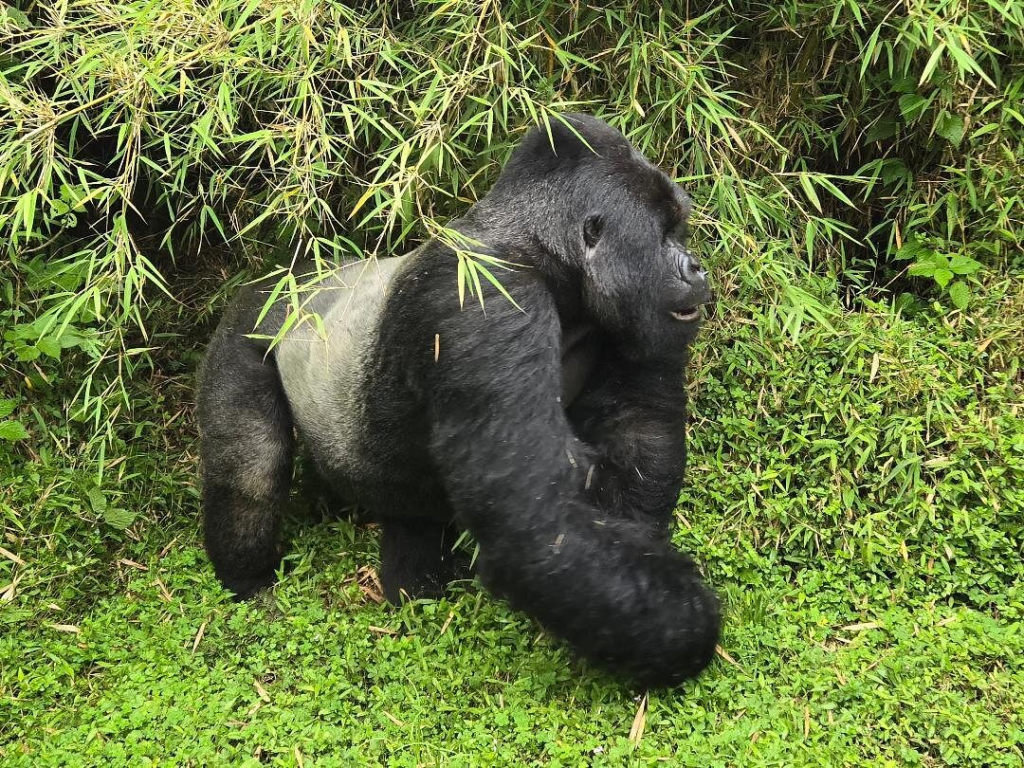
Gishwati-Mukura National Park guide for all first-time travellers on a Rwanda safari. Explore everything about Gishwati-Mukura, a newly created National Park in Rwanda. Located in the Western Province of Rwanda, Gishwati-Mukura National Park is a compact Protected Area. This park alone sits on an area measuring 34 sq. km, and its boundaries extend to the districts of Rutsiro and Ngororero.
Gishwati Mukura National Park boundaries extend to the Congo Nile ridges and protects diversity of Albertine Rift endemic species of birds. Gishwati-Mukura is also bordered by Rubuvu and Nyabihu districts. It was created 10 years ago by combining Gishwati and Mukura Forest Reserves.
The Gishwati-Mukura Reserves are part of the Northwestern Province in Rwanda. The Gishwati lies near Lake Kivu and was inhabited by refugees during the Rwandan genocide in 1994. It was degraded due to a high dependency rate among refugees.
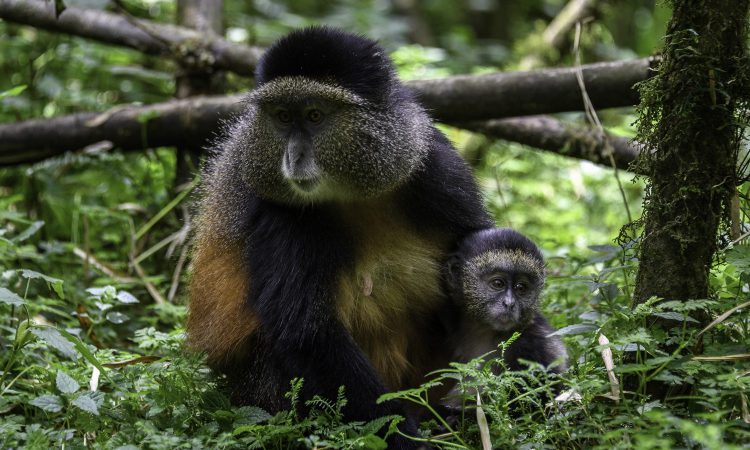
About 4 species of primates reside in the Gishwati Forest, including the common chimpanzees, l’hoest monkeys, golden monkeys, and blue monkeys. The forest reserve also supports the colobus monkeys plus other species.
Mukura Forest is only 16 sq. km and is situated on the Albertine Rift region. It is close to the Congo Nile ridge. Before its decrease, Mukura Forest extended to cover parts of the Volcanoes and Nyungwe National Park. Both Gishwati-Mukura are home to diverse birds and primates.
Attractions to see in Gishwati-Mukura National Park
Wildlife
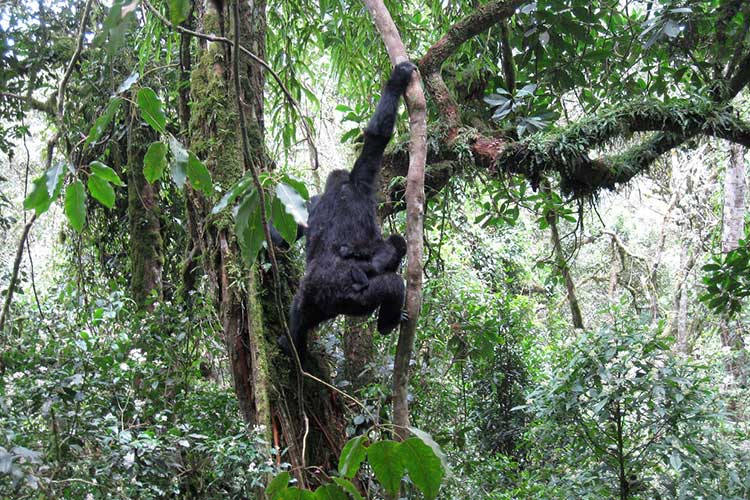
Over 35 chimpanzees reside in the Gishwati-Mukura National Park, and these share their habitat with the red-river hogs, l’hoest monkeys, colobus monkeys, black-fronted duikers, golden monkeys, serval, and side-striped jackals.
Birds to identify in Gishwati-Mukura
About 232 species of birds are confined to the Gishwati-Mukura, and they include Albertine Rift endemic birds. These include mountain yellow-warblers, regal sunbirds, red-throated alethe, cardinal woodpeckers, black-billed turacos, grasshopper buzzards, grey-crowned cranes, and white-necked ravens. Gishwati-Mukura also supports species of birds ranging from the Dusky crimson-winged, black-billed turacos, Rwenzori batis, Abyssinian ground thrush, slaty flycatchers, handsome francolin, martial eagle, and many others.
Tourism Activities/Experiences
Gishwati-Mukura National Park (Rwanda) offers experiences such as hiking/nature walks, birding, and chimpanzee tracking.
Guided chimpanzee tracking
Chimpanzee tracking offers you a rare opportunity to visit and explore more about chimpanzees, learn more about their behaviors, and take photos. At Gishwati-Mukura, expect to explore a habituated community of chimpanzees, and your adventure is likely to extend for 2-5 hours. You can be accompanied by a professional park ranger guide from Gishwati-Mukura National Park.
Birding
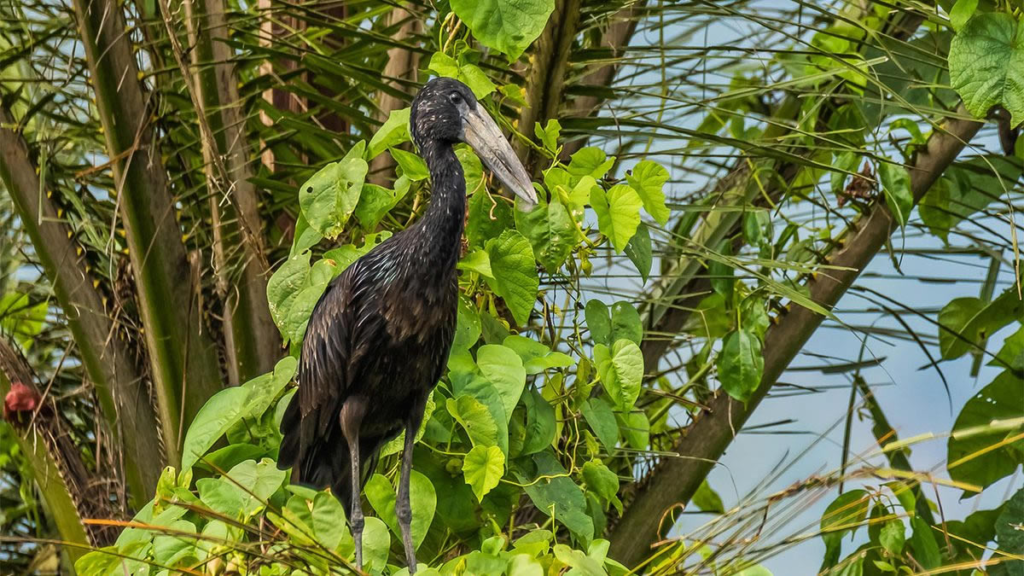
Gishwati-Mukura supports a great bird population. During the birding tour, you can stand a chance to identify birds such as the Rwenzori batis, Mountain yellow warblers, regal sunbirds, Grauer’s swamp warblers, strange weaver birds, Rwenzori turacos, and blue-headed sunbirds. Other birds you can come across include blue-headed coucals, Northern double-collared sunbirds, dusky crimson wing, purple-breasted sunbirds, and Willard’s sooty boubou.
Nature walks and hikes
Nature walking and hiking offer a great immersion into the Gishwati-Mukura National Park’s hidden habitats. With an experienced ranger guide, you can have a chance to explore some of the enriching habitats and trails. The key areas of interest to explore include Matyazo Hill trail (3km trail), Umushwati, and the waterfall trail. The Umushwati hiking trail is a 5-mile trail and is a perfect spot to connect you to the deeper part of Gishwati-Mukura National Park. The water walking trail is 10 km long and takes visitors to the park’s scenic waterfall. While on a guided nature walk, expect to find amazing species of primates like chimpanzees plus birds.
Cycling excursions
Cycling (bicycling) experiences are a perfect alternative to exploring Gishwati-Mukura National Park. This involves exploring the Congo-Nile Divide trail and also the remote part of the Park. This trail stretches to parts of the Nyungwe Forest National Park and allows you to observe visitors as they carry out their daily activities.
Community walks
Embarking on a community visit with an experienced Gishwati-Mukura National Park ranger allows you to interact with the residents. The communities adjacent to the park offer a great chance for you to learn more about local cultures, traditions, practices, and more. By engaging in the guided community walk, you get a chance to support the residents’ local enterprises.
The best time to go to Gishwati-Mukura
Gishwati-Mukura National Park is accessible at any time of the year. This is a tropical rainforest and is known to experience friendly weather conditions. The peak dry season, however, offers excellent weather conditions for you to enjoy the best of Gishwati-Mukura safaris. This is from June, July, August, and September, while another phase begins from December, January to February –the best months to embark on the Gishwati-Mukura chimpanzee trek.
It is also possible to organize a safari even during the wet/rainy season, and this is for birders on a Rwanda safari. It is that particular period of the year when you can experience the best of a bird-watching expedition with a chance to identify even migratory birds. The notable off-peak/wet/rainy seasons/months extend from March to May and October to November.
Gishwati-Mukura Safari Lodges to Stay
The available lodging options to consider for an overnight stay include Gishwati Lodge and Forest of Hope Guesthouse.
How to prepare for your Gishwati-Mukura safari
When planning a safari to Gishwati-Mukura National Park, expect to carry some of the essential items. They should include a pair of binoculars, a sweater, insect repellents, waterproof hiking boots, a rain jacket, a long-sleeved shirt, a safari hat, and a daypack. The safety packing list should comprise a first aid kit and insurance cover. The first aid kit, also referred to as a medical kit, can have emergency remedies.
How to reach Gishwati Mukura National Park –Rwanda
Getting to Gishwati-Mukura National Park can be by road, and this can be a 4-5 hours’ drive from Kigali. Or drive on the 35km route from Gisenyi/Rubavu. Another connection is the 70km route from Ruhengeri. To enjoy a smooth connectivity to Gishwati-Mukura, you can consider hiring a 4×4 safari car, and Rivo Safaris Ltd is in a position to arrange your transportation.
Conclusion: Gishwati-Mukura National Park is one of the best parks you shouldn’t miss to visit on a Rwanda safari. Plan and book a tour to explore the wonders of Gishwati-Mukura.