
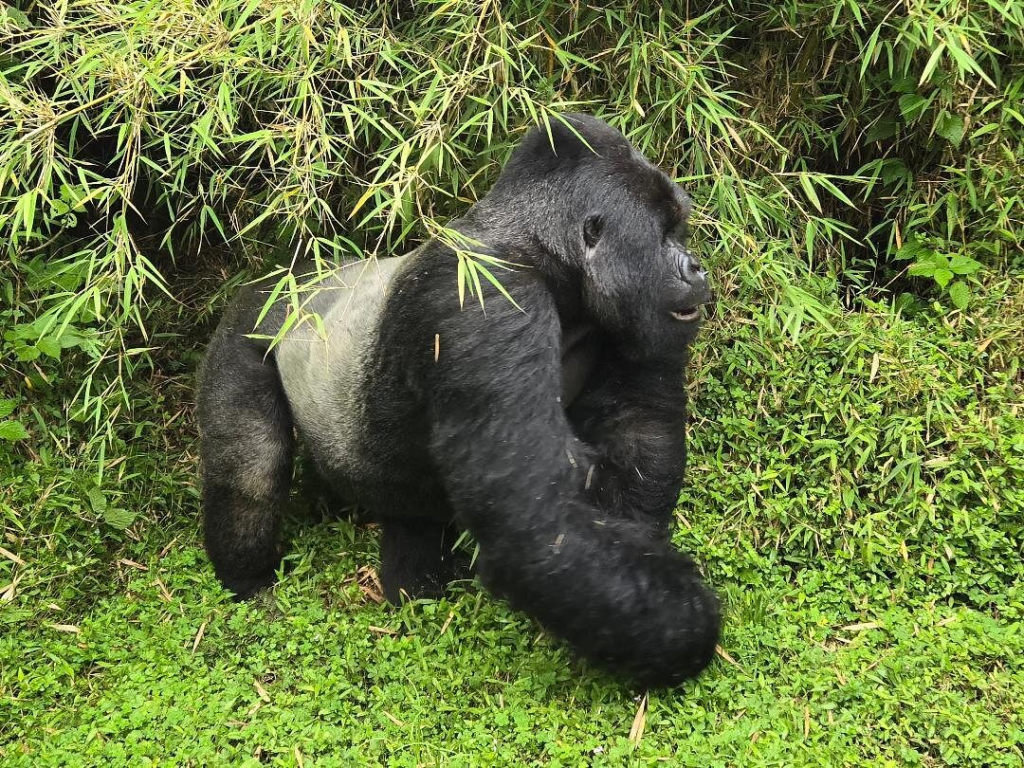
Get the ultimate guide to planning your memorable Uganda safari to Bwindi Impenetrable National Park (Bwindi National Park). This safari guide encompasses many things, including geographical location, size, the tourist attractions, experiences (activities), cost of gorilla permits, when to visit, accommodation, and how to reach the park.
Bwindi Impenetrable National Park is a spectacular rainforest Protected Area, located in Southwestern Uganda along the Rift Valley area. This Park straddles in the Kigezi region, with borders expanding to the 4 districts that is Kisoro, Kanungu, Rubanda, and Kabale. It is situated near the Democratic Republic of Congo, and adjacent to it is the scenic Virunga National Park.
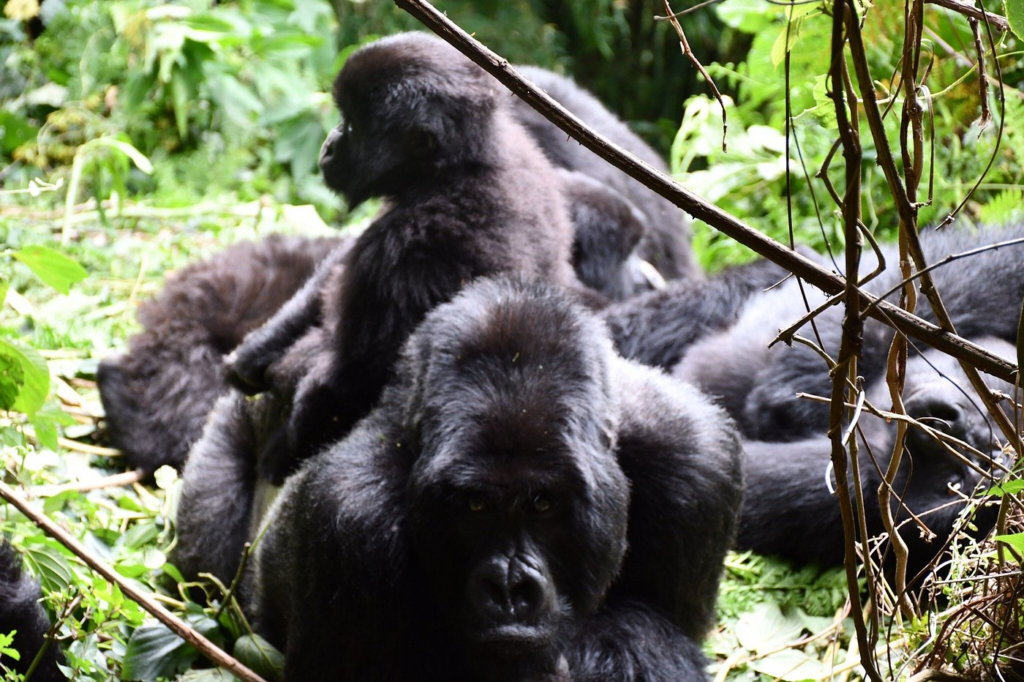
In 1991, Bwindi was declared a National Park, and in 1994, it became a UNESCO World Heritage Site. Overall, the park sits on 331 sq. km featuring a mixture of montane and lowland forest. The diverse habitats contain a variety of wildlife and bird species. The Park’s impenetrable forest dates back to about 25,000 years and comprises 163 species of trees, 1000 flowering species, and 104 species of ferns. Bwindi lies at the varying altitudes of 1160 to 2607m.
Attractions in Bwindi
Diverse Wildlife
Bwindi Impenetrable National Park shelters a huge profusion of wildlife, comprising 120 mammal species. Of the abundant wildlife present in Bwindi Impenetrable Forest, there are more than 500 mountain gorillas, and these reside harmoniously with other species. The additional animals to locate on a tour in Bwindi include olive baboons, red-tailed monkeys, forest elephants, vervet monkeys, pottos, blue monkeys, bush pigs, African clawless otters, and chimpanzees. Within Bwindi Impenetrable National Park also shelters several colobus monkeys, snakes, chameleons, geckos, rock pythons, pale-headed forest snakes, cobras, Great Lakes bush vipers, and others.
Bird species
Bwindi isn’t popular for only unique primates, but also diverse birds. A total of 350 bird species reside in the scenic forest of Bwindi National Park and include 23 Albertine Rift endemic species. The bird checklist to explore on a trip in this Park includes bar-tailed trogon, Shelley’s crimsonwing, Chapin’s flycatchers, Jameson’s antpecker, Rwenzori batis, Chestnut-throated apalis, Vieillot’s black weaver birds, yellow-fronted canary, and mountain wagtails.
Within Bwindi Impenetrable National Park, there are also other bird species to be identified, including Cassin’s flycatchers, pink-footed puffback, white-bellied robin-chat, African green broadbill, blue-spotted wood doves, Waller’s starlings, double-toothed barbets, Petit’s cuckoos, African citril, Sooty falcons, Angolan swallow, and Barred long-tailed cuckoos.
The Activities in/around Bwindi National Park
Major safari experiences to enjoy in and around Bwindi Impenetrable National Park include mountain gorilla trekking, forest/nature walks, birding, gorilla habituation, and Batwa cultural experience.
Gorilla trekking experience
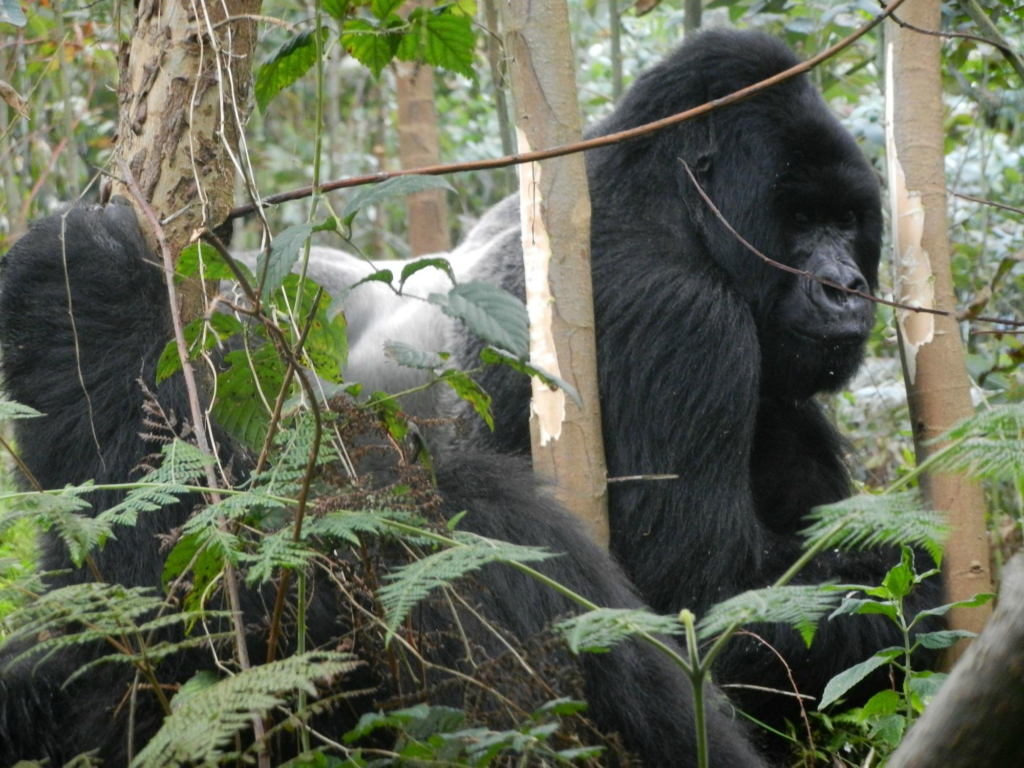
When it comes to visits to Bwindi Impenetrable National Park, gorilla trekking is a must-do. Bwindi is where over 500 mountain gorillas reside, with a total of about 24 habituated gorilla families. Visits to see mountain gorillas in this park involve trekking through the beautiful forest and unpredictable valleys/landscapes. Gorilla trekking offers a unique opportunity for you to meet gorillas in the jungle and you observe how they behave.
While in Bwindi, the focus of any gorilla trekker is the four sectors, which include Buhoma, Rushaga, Ruhija, and Nkuringo. The daily treks begin from these four regions after you have been briefed about gorilla trekking rules. At 8:00 am, you can officially enter the forest to locate a group of mountain gorillas with an experienced guide in the lead. The entire trek with gorillas is likely to go for 2 to 6 hours, which covers one hour of face-to-face interaction.
To participate in the gorilla trek in Bwindi National Park, you should have a valid permit and each is obtained at US Dollars 800 per person. This cost applies to the category of foreign non-residents, USD 700 if you are a foreign resident, while East Africans pay UGX 300,000 per visitor. Consider booking your valid gorilla permit in advance through a local expert like Rivo Safaris Ltd.
Gorilla Habituation Experience
Bwindi Impenetrable National Park is most popular for its thrilling gorilla habituation experience. With this particular primate adventure, your focus should be visiting the semi-habituated group. Unlike the traditional treks, gorilla habituation is only carried out in the Rushaga sector and permits are available for booking at US Dollars 1500 per person. During gorilla habituation, expect to spend longer part of your day while you follow gorillas and observe how they behave and take pictures. A gorilla habituation experience offers up to 4 hours of up close and personal encounter in the jungle compared to 1 hour on normal gorilla tracking session.
Birding/bird-watching
A guided birding tour through Bwindi Impenetrable Forest rewards birders with astonishing sights of birds such as Ross’s turacos, African paradise flycatchers, African pygmy kingfisher, African citril, Angolan swallow, Archer’s robin-chat, African hill babblers, dusky twin spot, double-toothed barbet, and Elliot’s woodpeckers, cape wagtail, and many others. The special birding sites to visit include Buhoma waterfall, Munyanga River, Mubwindi, and Rushura Hill trail.
Guided forest/nature walks
Bwindi ranks on the top list of iconic hiking spots in Uganda. With a myriad of hiking opportunities, the park promises incredible experiences and complete immersion into the jungle. Expect amazing interaction with nature along the unique trails such as the bamboo, Munyaga River, Ivy River trail, Kashasha River, and Buniga Forest trail. Other special birding trails in Bwindi Impenetrable National Park include Buhoma-Nkuringo, Rushura, and Muzubijiro Loop.
Cultural safari experiences
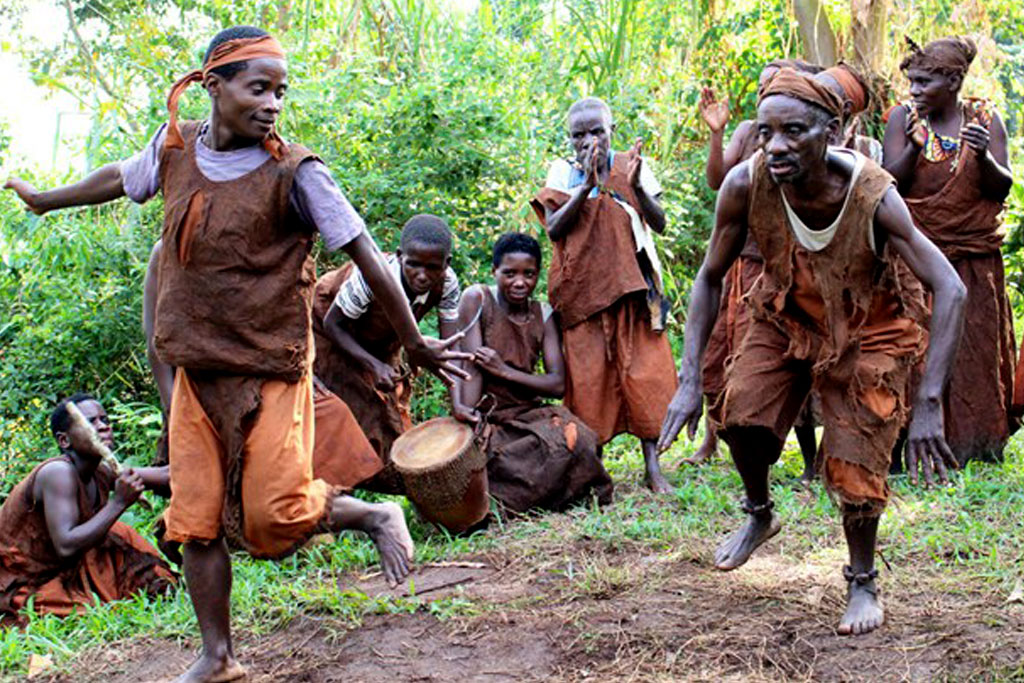
Visitors can also have an addition of community tours, a great opportunity for you to meet and interact with the Batwa or Bakiga residents living adjacent to Bwindi Impenetrable National Park. During the community visits, expect to learn more about distinct traditions, cultures, and many other practices that the Batwa/Bakiga can showcase to you.
Cycling excursions
Guided cycling (biking) tours offer an incredible opportunity for you to penetrate some of the rewarding sections of Bwindi. Visitors go further to explore the surrounding communities, watch residents as they take on their daily activities. Visitors in need of cycling excursions can rent a bike at the Ride 4 a Woman, the key organizers of cycling experiences adjacent to Bwindi. By participating in the cycling tours, you become a great contributor to the Ride 4 a Woman initiative.
When to visit the Park
The ideal time to explore Bwindi Impenetrable National Park is during the peak dry season. This can be during the extended (long) dry months, that is, June, July, August, and September. Or you can book a safari anytime during the short peak season that is December, January, to February. Bwindi is also open to guests during the wet or rainy season, that is, from March to May and from October to November. The rainy (off-peak) months are known to receive heavy rains compared to the dry season, and you should be prepared for any challenge, especially conquering the muddy and slippery slopes.
Major Accommodation Options to Stay
Bwindi Impenetrable National Park safaris won’t leave you out of accommodation choices. There are abundant options ranging from budget, midrange, and luxury, which are distributed in the four key regions. They include mostly the Gorilla Heights Lodge, Nkuringo Bwindi Gorilla Lodge, Mahogany Springs Lodge, Gorilla Leisure Lodge, Gorilla Forest Camp, Clouds Mountain Gorilla Lodge, Four Gorillas Lodge, Buhoma Lodge, Chameleon Hill Lodge, and Nshongi Camp.
How to reach Bwindi for a vacation
By road transportation. Bwindi National Park is accessible in an 8 to 9-hour drive. This involves departing from Entebbe or Kampala, and you navigate via the Masaka-Mbarara-Kabale route. Guests can also cross from Kigali via Katuna/Chanika and visit Bwindi. This route takes 4-5 hours, and all the road travel options require a 4×4 safari car. Use air transportation, by taking a domestic flight from Entebbe Airport/Kajjansi Airfield to Kisoro Airport/Kihihi Airstrip. Arrive early, and you can be transferred by road to Bwindi National Park.
Plan and book a safari to explore Bwindi Impenetrable National Park and its wonders. Contact Rivo Safaris Ltd to secure a slot for you to embark on a journey to visit Bwindi and enjoy the myriad of its experiences, including gorilla trekking.