It is no brainer that Nyungwe National Park, a primate haven found in the rugged landscapes of southwestern Rwanda, has been coined the “crown jewel” in the Land of a thousand Hills.
From time immemorial, Nyungwe National Park’s landscapes have been considered a visual spectacle and gem worth exploring by visitors and locals alike.
Known for its high biodiversity in Rwanda, it is a destination that caters to the needs and aspirations of all visitors, from nature enthusiasts to those looking to unwind with the sounds of Mother Nature. This Park is a significant area as it gives life to several forest wildlife species.
Where is Nyungwe National Park?
Nyungwe Forest National Park is a uniquely situated, forest-filled natural Sanctuary nestled deep in Rwanda’s Southern province, and borders Burundi, Lake Kivu, and the Democratic Republic of Congo to the west.
History and Size of Nyungwe National Park
This 1000-square-kilometer Paradise is a biodiverse tropical rainforest with a special oddity, catering to the needs and aspirations of all travelers yearning for unforgettable experiences.
Nyungwe Forest joined the list of Rwanda’s National Parks in 2004, which made it the third Protected Area in the Land of a Thousand Hills.
What makes Nyungwe Forest National Park such a special place?
Wildlife
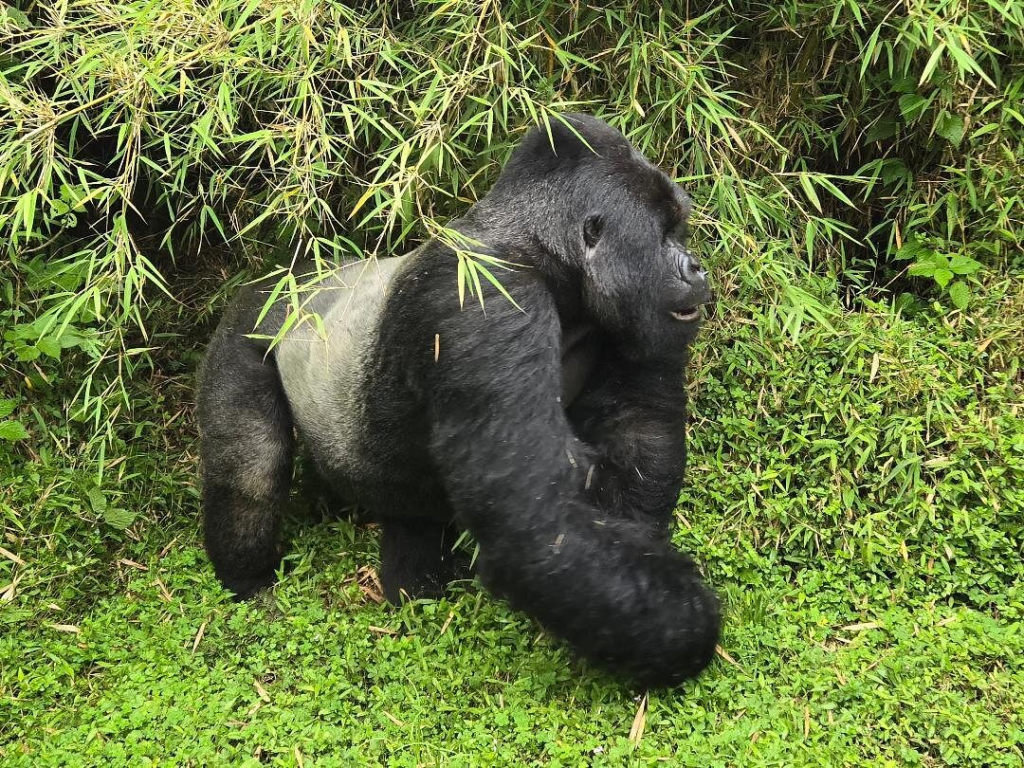
Nyungwe Forest National Park is a wildlife haven with over 75 mammal species. Over 13 primate species (including mankind’s closest relatives in the animal Kingdom- chimpanzees, the owl-faced monkeys, Angolan black and white Colobus monkeys, blue monkeys, Dent’s Mona monkeys, Dent’s Mona monkeys, silver monkeys, vervet monkeys, the iconic grey-cheeked mangabey, Olive baboons, L’hoest monkeys, and the red-tailed monkeys, among others). Other mammal species you will most likely come across here include the Congo clawless Otters, serval cats, and mongoose, among others.
Plant life
Over 1068 major plant species are found in Nyungwe Forest National Park. Over 10% (160) of these plants are orchids, and the wide variety and abundance of plants support herbivores, birds, and other wildlife species.
Bird species
There are over 310 varieties of birds, including 27 Albertine Rift endemic species and 121 forest-endemic bird species. This twitcher’s Paradise is home to Shelley’s crimson-winged birds, stripe-breasted tit, Great Blue Turacos, bar-tailed trogon, red-collared babblers, Archer’s robin chat, Grauer’s swamp warblers, white-tailed blue flycatchers, black-faced flycatchers, white-headed hoopoe, Congo-bay owlets, olive woodpeckers, Kungwe Apalis, strange weavers, Rwenzori batis, Kivu ground thrush, Rockefeller’s sunbird, Neumann’s short-tailed warblers, white-tailed blue flycatchers, and chestnut owlet, among others.
Unmissable Experiences in Nyungwe Forest National Park
Chimpanzee tracking tours
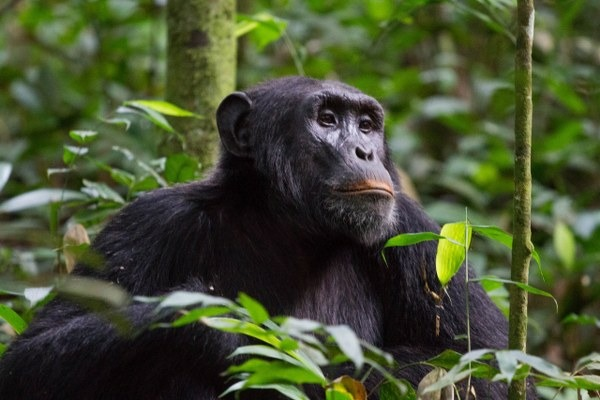
For many travelers, especially primate enthusiasts, a chimpanzee tracking tour in Nyungwe Forest National Park is the pinnacle of possible safari experiences. Imagine joining expert Rangers out in the jungles to search for mankind’s closest relatives in the animal Kingdom.
While on this adventure, be prepared to explore more of the forest (birds, primates, and plant species), and climax with an hour encounter to watch and take photos of chimpanzee behavior- their body gestures, and day-to-day routines. Rwanda has about 500 chimpanzees living in both Cyamudongo Forest and Nyungwe Forest (starting from Uwinka).
Other primates and forest wildlife species might wander past while you are on this trek that lasts 2-4 hours. This is climaxed with a one-hour encounter to learn about them.
Birding in Nyungwe Forest National Park
With over 310 bird species in Nyungwe Forest National Park, it is the perfect place to bird watch because you are sure to spot more than a few rare avifauna species. Look out especially for the bar-tailed trogon, red-collared babblers, Archer’s robin chat, Grauer’s swamp warblers, white-tailed blue flycatchers, black-faced flycatchers, white-headed hoopoe, Congo-bay owlets, olive woodpeckers, and many others. The best time for bird watching in Nyungwe National Park is during the wet season, around March to May, and then in November, as most migratory bird species arrive.
Guided forest walks
Guided forest walks are a great way to get in touch with the Nyungwe Forest surroundings and understand the terrains that different wildlife species live in. While this might seem like a hair-raising adventure, the experienced and armed Ranger guide/s will never put you in danger. They always ensure the area is safe from predators before you take a stroll.
There are over 150 kilometers of hiking trails running through this Afro-montane tropical rainforest. These include the Uwinka trail, Kamiranzovu trail, the 227-kilometer-long Congo Nile divide, Karamba trail, Imbaraga trail, Umugote trail, Irebero Trail, and Igishigishigi trail, among others.
Colobus monkey tracking
For those who want to experience the unique life and behavior of the Angolan black and white Colobus monkeys in their natural habitat, it is also possible in Nyungwe Forest National Park.
Canopy walks
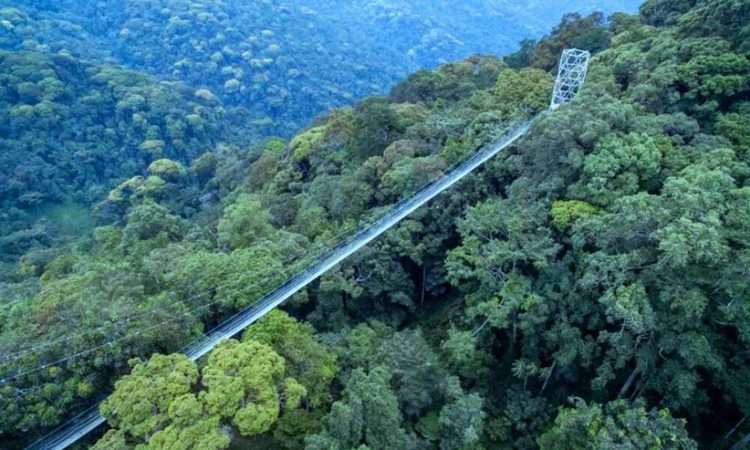
Nyungwe Forest National Park also offers the invigorating canopy walks, which involve walking through a 200-meter-long walkway that is suspended over 70 meters above the ground. You can enjoy this 1-2-hour adventure in the morning or afternoon, with an opportunity to enjoy sights and sounds of primates, birds, and so much more.
Cultural/Village tours
Another special thing to do while in Nyungwe Forest National Park is learning about the cultures, lifestyles, and traditions of local communities living around Nyungwe Forest National Park. This activity forms an integral part of your safari experience, while fostering, enriching, and promoting respectful cultural exchange as well as unforgettable experiences.
When should I go to Nyungwe Forest National Park?
Nyungwe Forest National Park is at its best from June to September, then from December to February. This is when rainfall levels are reduced, and forest trails are less muddy or slippery. These months are the dry season, which also corresponds with much of the high season, when prices are at their highest and availability in accommodations or chimpanzee permits is harder to come by.
All of this means that the wet season months of March, May, April, October, and November can be excellent months to explore, with lower prices. During this time of the year, which is the low/Green/shoulder season, the weather can be unpredictable. This means the rains become heavier and the forest trails muddy and slippery.
Aside from the absence of crowds, other advantages of traveling in Nyungwe Forest in the wet season are that migratory bird species arrive in the area from North Africa and Europe (especially in April and November).
Nyungwe accommodation options
Accommodation options around Nyungwe Forest National Park include One & Only Nyungwe House, Munazi Lodge, Nyungwe Top View Lodge, Nyungwe Nziza Eco Lodge, Gisakura Guesthouse, and Emeraude Kivu Resort, among others.
How to get to Nyungwe Forest National Park
The small safari Town of Cyamudongo is the gateway to the Nyungwe Forest National Park, with 45-minute Helicopter flights from Kigali City to Kamembe Airport. From Kamembe airstrip, it will depend on where you are staying. Some Safari Lodges provide transfers from the Airport to your accommodation by 4X4 safari vehicle.
There is also an option of taking the 7-8-hour road trip from Kigali City to Nyungwe Forest National Park via a well-maintained 227-kilometer Kigali-Huye-Rusizi route.