
WILDEBEEST MIGRATION IN MASAI MARA
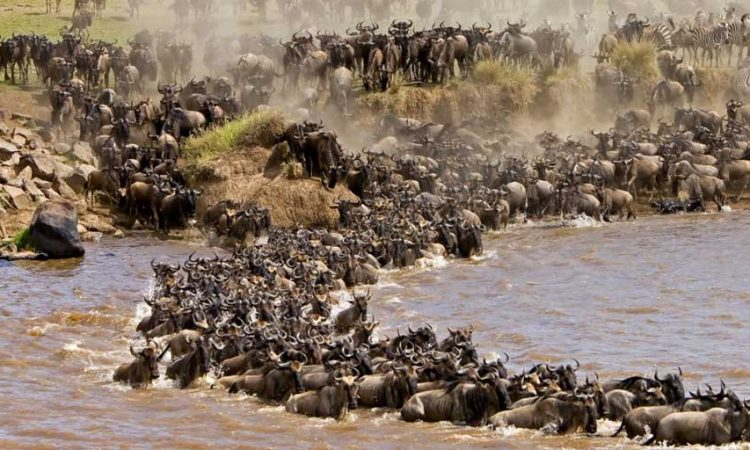
Masai Mara National Reserve is one of the best destinations in Africa that you shouldn’t miss to visit to experience the captivating wildebeest migration. Witnessing the powerful wildebeest migration in Kenya’s Masai Mara offers encounters of a lifetime. Over 2 million wildebeest cross the Mara River, taking a circular pattern of movement between the Serengeti and Masai Mara. The most powerful of the Great Migration is the Mara River crossing.
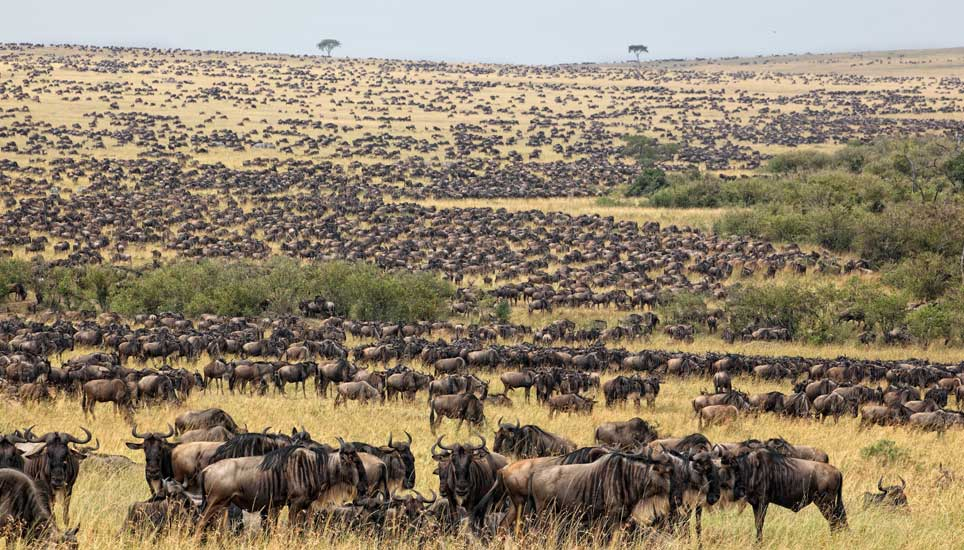
Accompanying millions of wildebeest are 1000s of other grazers/mammals, including the Grant & Thomson’s gazelles, elands, and zebras. The Mara migration occurs once a year, with nature lovers guaranteed of mesmerizing encounters on a Kenya safari. The migration circle takes a clockwise pattern with large herds of wildebeests and other grazers trekking over 800km through the Serengeti & Masai Mara ecosystem. The intention is mainly to search for greener pastures & water.
The main Highlights of the Mara Migration (Kenya)
The key highlights that characterize the Mara migration experience include the Mara River crossing, predator swing action, large herds, and dynamic events. The River wildebeest migration along the Mara River offers a unique opportunity for you to watch herds of wildebeests. The most memorable moment of the Mara River crossing is watching wildebeests as they try to find themselves out of the Nile crocodile-infested river to the mainland. Huge crocodiles can be observed as they try to grab wildebeests, thus offering an unforgettable encounter.
The predator action in the wilderness. The wildebeest migration not only rewards you with magical views of wildebeests but also presents you with a rare opportunity to spot the majority of the predators. The Maasai Mara is popular for its abundant predators, often spotted in their hideouts or as they chase after the wildebeests. The notable predator species that you stand a chance to find in Kenya’s Maasai Mara Reserve include cheetahs, leopards, & lions.
The peak migration season comes with abundant food supplies, including wildebeests and other mammals. Lions, cheetahs, and leopards can be spotted as they hunt the wildebeests.
Observe large herds
During the Great Migration, expect to encounter plenty of wildlife and birdlife. The Maasai Mara National Park/Reserve holds a diversity of plain wildlife, including wildebeests. These can be spotted as they embark on the search for pasture and water in the same direction.
The Masai Mara also supports other abundant wildlife worth encountering on a safari. The diverse wildlife to explore in addition to the wildebeests include giraffes, cheetahs, rhinos, elephants, hippos, gazelles, and bat-eared foxes. Other wildlife to stand a chance to find in the Masai Mara include vervet monkeys, Topis, warthogs, baboons, and spotted hyenas.
Away from wildlife, you can also explore the diversity of birds, including yellow-billed storks, little grebe, Augur buzzards, hooded vultures, African spoonbill, ostriches, African grey hornbill, white-backed vulture, the lappet-faced vulture, white-rumped robin chats, and white-bellied cannery. Other notable birds of the Masai Mara include the red-bellied buffalo weaver bird, saddle-billed storks, spotted mourning thrush, long-tailed fiscal, parrot-billed sparrow, and more.
The best time to witness the Masai Mara migration
Timing your vacation to witness the Great Migration is essential. To experience the great migration, expect to book your migration tour from July to October. It is during these months that you stand a higher chance to witness millions of wildebeests in the Masai Mara. Note, they are also busier months of the year, and early booking should be done to guarantee you a slot.
Around July, wildebeest herds embark on the journey to the Masai Mara Reserve. They trek from the Serengeti National Park to begin searching for water & food. It is an excellent month to experience or observe the dramatic Mara River crossing.
August –It is around August when the majority of the wildebeests and other grazers find themselves in the Masai Mara. As they enter, they are welcomed by the big cats. September on the other hand offers favorable conditions for tourists to explore the Masai Mara Reserve plains. During the guided game drive, expect to witness the unusual species of animals. Whereas October marks the start of rainfall. By November, wildebeest herds begin to trek towards the Serengeti National Park in Tanzania once again.
Accommodation options
While on a migratory safari, expect to stay in some of the comfortable lodging options or camps. Key accommodation options to consider for overnight include Mara Serena Safari Lodge, AA Lodge Masai Mara, JW Marriott Masai Mara Lodge, and Mara Expedition Camp. Other accommodation alternatives to book in this reserve include Mahali Mzuri, Richard’s River Camp, Basecamp Wilderness, Elephant Pepper Lodge, etc.
Other activities to do in the Masai Mara
Hot Air balloon: Maasai Mara also offers tourists a chance to enjoy a guided hot air balloon excursion. Balloon tours offer an exceptional aerial viewing experience over the plains. Expect to watch a range of wildlife including the buffaloes, elephants, lions, and wildebeests.
Game drives. Embarking on a normal guided game viewing offers a great immersion into the Masai wilderness while you search for the big 5 game and other wildlife. The Masai Mara holds a diversity of animals to be spotted on a guided game drive, including the elephants, lions, cheetahs, leopards, buffalo, and antelopes.
Walking excursions: You can also have a deep immersion into the wilderness on a walking or nature walk. The Masai Mara is an excellent location to experience mesmerizing long walks while you appreciate the wonders that reside in this nature reserve.
Community visits. To guests who love authentic cultures and traditions, embarking on the guided community walks or visits rewards you with remarkable interaction with local residents who live adjacent to the reserve.
The Maasai people or community should be considered a must-visit to experience the best of African cultures and practices. They hold unique connection with Masai Mara Reserve as a destination. At the Maasai village, expect to get great entertainment from the energetic Maasai dances and music performances.
Bird watching –Masai Mara also offers all-year-round birding experiences to enthusiastic birders. The reserve supports a total of 470 species of birds and includes Augur buzzards, secretary birds, yellow-billed storks, African darters, Little grebe, and Hamerkop scopus, etc.
WILDEBEEST MIGRATION IN SERENGETI
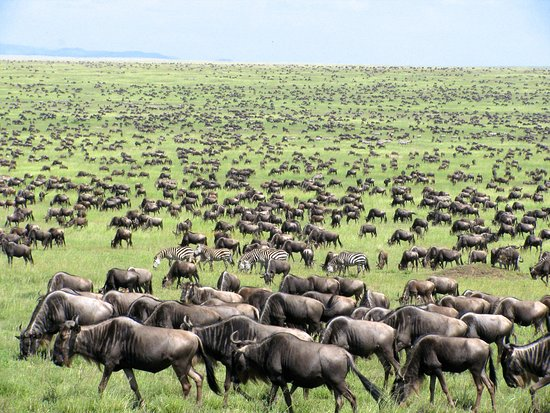
The great migration experience in Serengeti presents you with a rare opportunity to witness the world’s powerful herd migration of animals. The Serengeti wildebeest migration is known to be one of the world’s spectacles worth encountering in Tanzania. The Serengeti wildebeest migration involves a powerful movement of about 1.5 million wildebeest accompanied by 1000s of zebras, gazelles, and other grazers/ungulates. The migration takes a typical cycle where wildebeest cross between the Serengeti and Mara ecosystems.
The Great Migration occurs primarily for wildebeests to search for nutritious pasture and water. Each year, wildebeests embark on an extensive journey covering up to 1000 km and encounter obstacles from predators such as cheetahs, hyenas, leopards, wild dogs, lions, and crocodiles. During the migration, it is usually the strong that survive.
The Serengeti migration mainly depends on the rainfall patterns, and this happens every year. As a nature lover with an interest in witnessing the Serengeti wildebeest migration, it is essential for you to understand the monthly movement pattern as explained below.
The Serengeti Migration month-by-month pattern
Early November, the park records short rains. Towards the end of November & December, wildebeest herds begin to arrive on the short-grass areas in the Serengeti National Park. They dominate the Ndutu, Seronera, and also the Northern part of the Ngorongoro Conservation Area. They can be spotted as they are dispersed across the respective plains while they are feeding on the nutritious pasture.
Wildebeest stay in the Seronera and Ndutu the entire January, February, & March. The majority of the wildebeest calves are welcomed, and slowly, they begin to move westwards. By April, they begin their movement to the North.
Around May, wildebeest migration is witnessed in the North where wildebeest search for water and pasture. The key spots to target include Moru Kopjes & West of Seronera where a powerful movement of the wildebeests can be heard. As they embark on the trek, they comprise 1000s of zebras, gazelles, and more.
A section of the wildebeests moves to the North of Seronera, while others go further west. June is the month of the year when the migration usually stops along the southern end of the Grumeti River. The Crumeti River features channels that block/slow the wildebeest movement to the North. The majority of the wildebeests congregate around the Grumeti along the western corridor while the population builds up before the actual river crossing happens.
The Grumeti River features a series of channels/pools, though they aren’t continuous in nature. Between July & August, the migration continues to the far northern end and some access the Grumeti Game Reserve or Ikorongo. Around September, wildebeest herds cover the Northern Seregeti. In October, herds migrate again to the south via the western Loliondo & Lobo area of the Serengeti National Park.
Fact About the Serengeti Great Migration Experience
The Serengeti Great Migration involves the movement of a huge concentration of wildebeests. The movement often doesn’t attract only wildebeests but also other wildlife. There is a belief that wildebeest can sense & respond to distant lightning as well as thunderstorms.
Wildebeests move around regions also often dominated by predators. There is a possibility to observe several of the predators, plus several other animals. Serengeti is known to offer excellent views of lions while they hunt wildebeests. An addition of these makes the great migration expedition a more gratifying experience than any nature safari.
What else to do in Serengeti
Serengeti National Park offers more than the Great Migration. There is a great deal to enjoy in other adventures, including game drives, hot air balloon tours, nature walks, and birding.
Game drives
A rewarding guided game drive through the Serengeti offers visitors a rare opportunity to explore the diversity of wildlife. The priority is usually to locate the big 5 game, plus numerous mammals & birdlife. Serengeti features enriching game tracks where a sensational game drive expedition can be enjoyed. It can be during the morning or afternoon game drive, or you can take a full-day game viewing safari. While exploring the Serengeti, expect to navigate via the tracks such as Seronera Valley, Moru Kopjes, & Northern Serengeti. Each of the key game tracks in Serengeti promise astonishing encounters whereby the Central region is famous for lions and leopards. The Western corridor/Mbalageti and Grumeti Rivers offer mesmerizing views of the wildebeest river crossing on the Tanzanian side. The Western region is also an ideal spot for witnessing the cheetahs.
The Ndutu or Southern Serengeti plains offer excellent ground for watching the wildebeest calving event. The calving or birthing season is experienced from January to March.
Hot air balloon experience
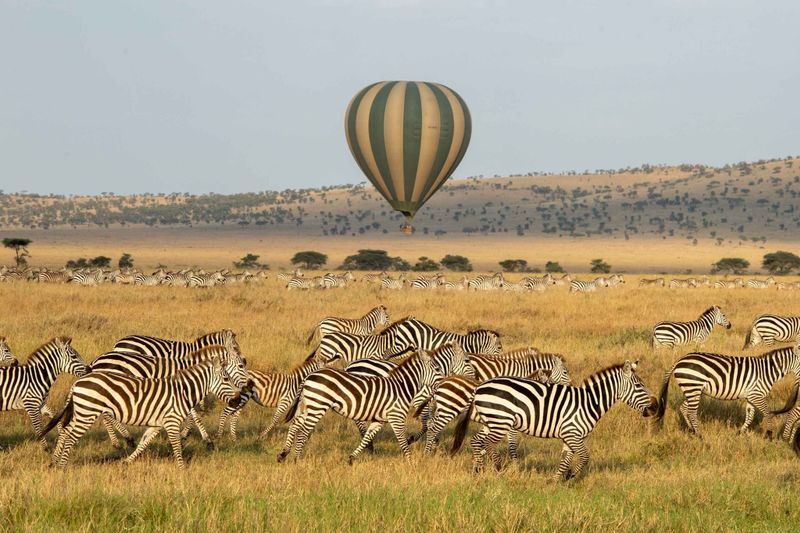
Visitors can embark on a hot air balloon adventure and witness the diversity of wildlife, including wildebeests. The one-hour ballooning tour is excellently enjoyed around 6:00 am and offers visitors a unique game viewing experience. It is conducted with an expert pilot and the baskets take around 8-16 pax.
Best time to experience the Great Migration
The Great Migration is best experienced from June to October. These are peak months to witness millions of wildebeest herds, and the demand often increases. Visitors interested in the Great Migration can ensure they book their vacation in advance.
Beyond wildebeest, the Serengeti promises amazing encounters with wildlife in the lush savanna plains and other habitats. The 14,763 sq. km Serengeti also shelters wildlife such as the striped hyenas, cheetahs, honey badgers, buffaloes, black rhinos, bat eared foxes, Aardwolves, African elephants, leopards, hippos, and an estimate of 500 species of birds.
Where to stay during the Serengeti Migration Tour
Key accommodation choices to consider booking in and around Serengeti National Park, Tanzania, range from Budget to Luxury. Top lodges to stay in include Anantya Serengeti, Serengeti Kifaru Tented Lodge, Seronera Wildlife Lodge, Elewana Serengeti Migration Camp, Osero Serengeti Tented Camp, Melia Serengeti Lodge, and Singita Mara River Camp.
Getting to Tanzania’s Serengeti Game Park
Driving from Arusha to Serengeti takes between 6 and 7 hours on a rewarding route. Or you can cross through the Seronera border from the Masai Mara to the Serengeti. Using air travel, expect to fly from your home country to Arusha or Kilimanjaro Airport and connect to Serengeti using domestic flights.