
Serengeti National Park: Location, Safari, Wildlife & Migration Guide 2026
Serengeti National Park is Tanzania’s iconic destination, and its name is derived from the Maasai word ‘Siringet’, meaning ‘endless plains’. The Serengeti prides itself as home to diverse animals, including the Big 5 & wildebeests.
This park is situated in the northern tourism circuit of Tanzania and is bordered by Kenya’s Masai Mara National Reserve & Ngorongoro.
Serengeti National Park was created in 1952 and currently sits on the area of 14,763 sq. km. It extends to cover the northern section towards Kenya and Lake Victoria to the west end.
The vast plains of the Serengeti harbour an abundant mammal population that makes it a great destination to explore on a Tanzania safari.
Safari Areas in Serengeti
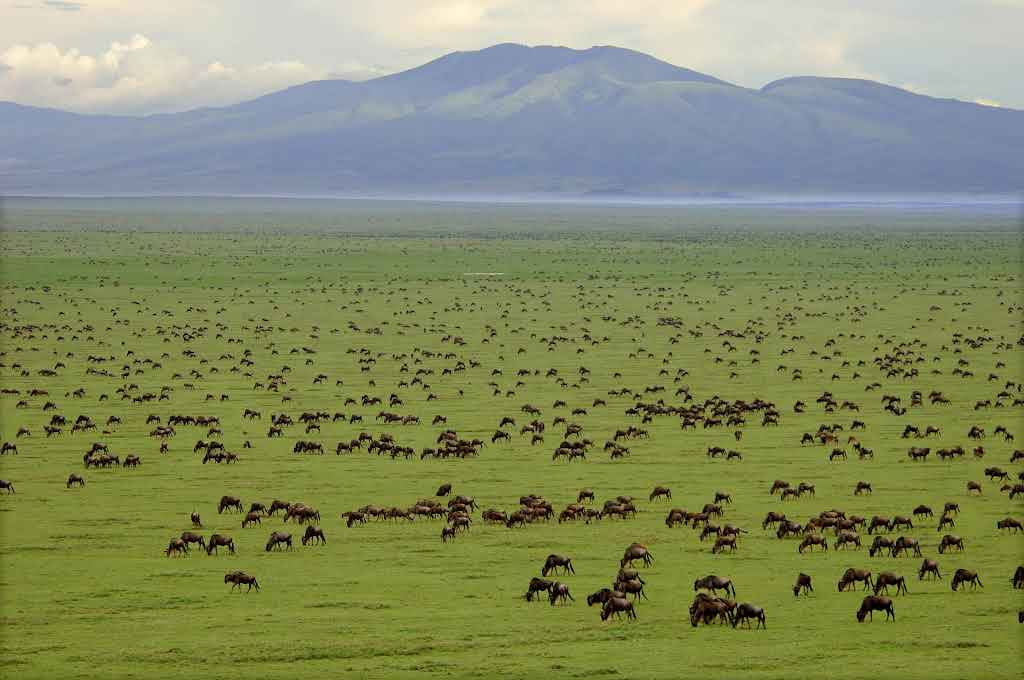
The diverse ecosystem of Serengeti National Park is supported in the different sections/regions. The main safari areas that make up the Serengeti National Park include the Seronera, Grumeti Game Reserve, Ndutu, & Western Corridor.
The Seronera region is the Serengeti’s central point for game viewing, offering unforgettable experiences, especially from December to April.
The Ndutu Plains comprise the open grassland where you can locate abundant wildlife. It is a key spot for witnessing the calving session between January and March. Grumeti Game Reserve lies in the western end of the park and offers excellent wildlife viewing safaris.
Lobo Hills & Northern Plains comprise the scenic green hills. This section extends from the Lobo Hills up to Seronera. It is characterised by dense vegetation and sometimes attracts fewer crowds.
The western corridor of the Serengeti consists of different habitats, including woodlands, open savannas, thorns, and more. This is an area where you can stand a chance to find a significant population of wildlife, including zebras, lions, wildebeests, and elephants.
What to do and see in Serengeti
At the Serengeti National Park, expect to witness an abundant animal population. The park holds big cats, including leopards, cheetahs & lions, plus other wildlife such as rhinoceroses, cape buffaloes, elephants, and hyenas.
Serengeti also shelters animals such as hippos, warthogs, giraffes, impalas, topis, elands, dik-dik, and black & white colobus monkeys.
Bird species
About 500 species of birds reside in the Serengeti and include endemic & near-endemic species.
The park’s abundant bird species include secretary birds, Fischer’s lovebirds, Kori bustards, Schalow’s wheatear, rufous-tailed weavers, ostriches, lappet-faced vultures, tawny eagles, white-backed vultures, superb starlings.
Hildebrandt’s starling, grey-crested helmet-shrikes, black-headed gonoleks, and southern ground-hornbills.
Other birds to explore include Egyptian geese, augur buzzards, silver birds, white-faced whistling ducks, African green pigeons, laughing doves, ring-neck doves, and more.
Game drives
When it comes to safaris to Serengeti National Park, game drives are the best option. The park offers morning, afternoon & evening game drive sessions, or you can spend the entire day while you explore its wonders.
The game drives along the Serengeti plains offer mesmerising sightings of wildlife, including the big 5 and other diverse species of mammals.
Birding
The Serengeti is one of the best birding destinations to explore different birds.
The park is supports birds such as pelicans, yellow-billed storks, secretary birds, ostriches, Kori bustards, lesser flamingos, rufous-tailed weaver birds, lilac-breasted rollers, and white-headed buffalo weaver.
During bird-watching tours, expect to also spot bird species such as martial eagle, bateleur, red-throated bee-eaters, Schawlow’s wheatear, and others.
The Great Migration experience
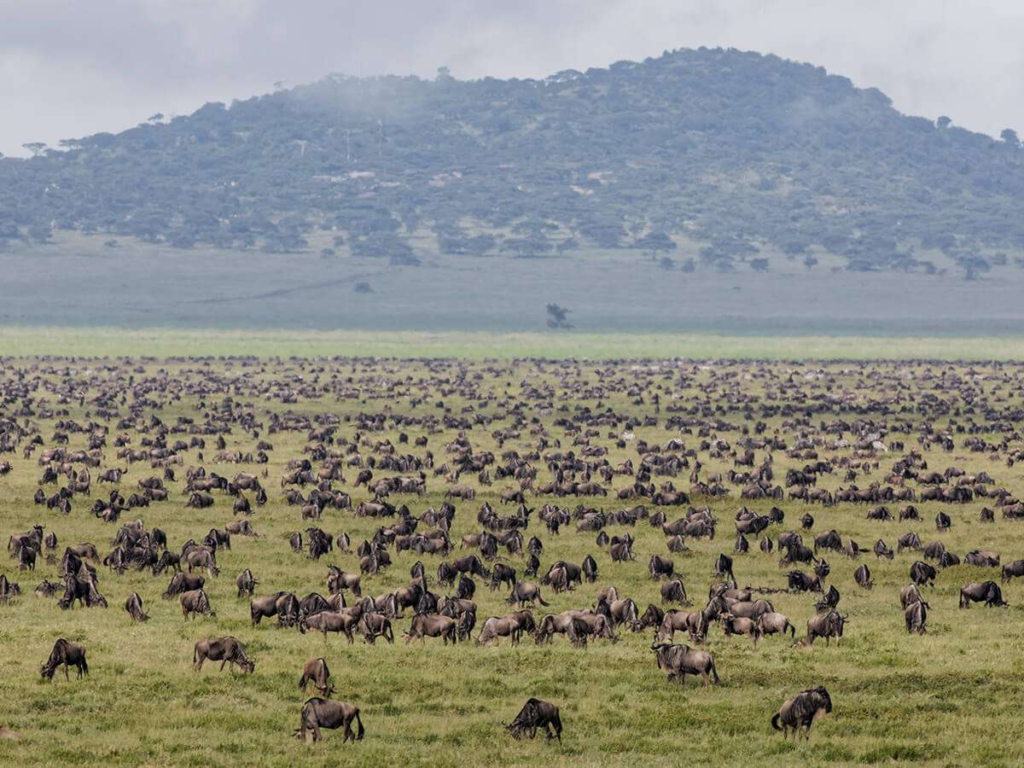
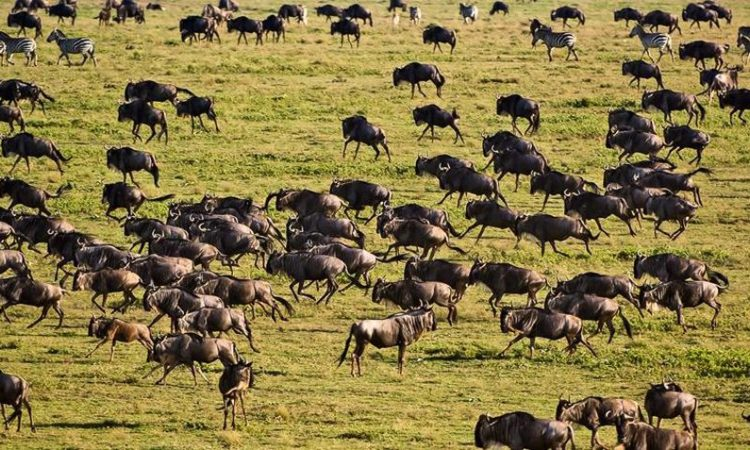
Witnessing the Great wildebeest migration is a must-do when it comes to the Serengeti tours. Get a chance to observe over 1.5 million wildebeest together with gazelles and zebras as they embark on a journey to find fresh grazing spots.
The Great Migration is notably the biggest terrestrial mammal migration event. Large herds embark on a move from the Southern calving spot to the Northern Mara River.
The wildebeest migration takes a pattern, with each month having a different event. December to March is a period when herds assemble around the southern end to begin birthing. The birth also attracts several predators that take advantage of the weak wildebeest mothers and the young ones.
From April to May, the herds are encountered as they move to the northwest through Moru Kopjes & Western corridors. From June to July, the majority of the wildebeest gather at the Grumeti River & move to the north as they prepare to cross the Mara River.
August and September offer a dramatic session where you can find wildebeest fighting for their lives as they try crossing the Mara River, which has huge concentrations of crocodiles.
Accommodation options
Serengeti National Park holds luxury, midrange & budget lodges.
The key lodges and camps to stay in include Lemala Ewanjan Tented Camp, Singita Mara River Tented Camps, Dunia Camp, Olakira Migration Camp, Kenzan Mara Tented Camp, and Four Seasons Safari Lodge.
Serengeti National Park also features accommodation options such as Seronera Wildlife Lodge, Serengeti Mawe Camp, Serengeti Sound of Silence, and more.
When to visit Serengeti (best months of the year)
The Serengeti’s gates are open to tourists all year round. But the best time for you to explore the Serengeti and its abundant wildlife is during the peak dry season when trails are more accessible.
This can be from June to October, the best months of the year that offer you the most thrilling game viewing experiences –for predators and wildebeests.
December to February also presents a unique opportunity for you to experience the best of the Serengeti, especially if your target is observing the wildebeest birthing event in the park’s plains.
How to get to the Serengeti
Road & air transportation offer a more convenient option for you to reach Serengeti National Park. By road, expect to set off from Arusha in a 4×4 car to the Serengeti, and your journey can cover around 6 hours.
The ideal access points include Fort Ikoma, Ndabaka, Bologonya, Handajega, Naabi Hill, & Klein’s gates.
By air, you can fly from Arusha Airport to one of the airstrips found in Serengeti, including Seronera, Sasakwa, Kogatende airstrips, or Ndutu airstrips.
Upon landing, a safari driver guide awaits to pick you up, and you can be transferred to your respective accommodation options.