
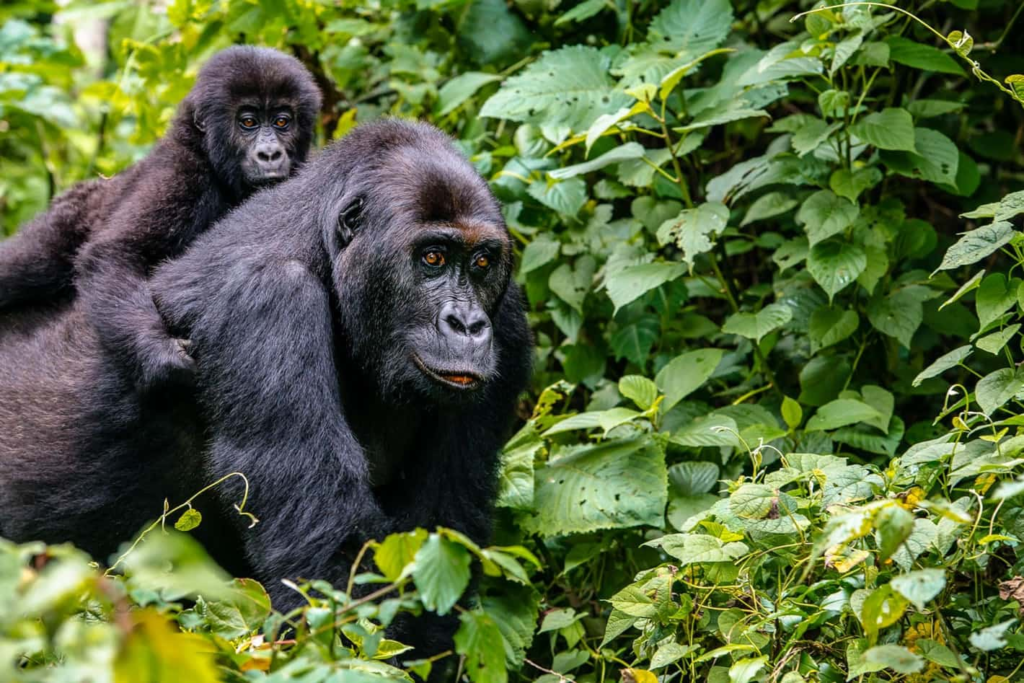
Why Are Mountain Gorillas Endangered? Key Causes, Facts & Conservation Effort (2026 Update)
Why are mountain gorillas endangered? Mountain gorillas are endangered due to a combination of human-driven threats and environmental pressures.
The main causes include habitat loss from agriculture and settlement, poaching (including snares meant for other animals), disease transmission from humans, and political instability in protected areas like Bwindi Impenetrable National Park and Virunga National Park.
Despite strong conservation efforts, their small population and limited habitat make them highly vulnerable, requiring continued protection and sustainable tourism support.
Mountain gorillas are among the most iconic and beloved primates on Earth, captivating adventurers and conservationists alike with their gentle strength and family bonds.
Yet, a shocking stat reveals the precarious reality: only around 1,060 mountain gorillas survive in the wild, confined to just two isolated regions—the Virunga Mountains spanning Uganda, Rwanda, and the Democratic Republic of Congo, and the Bwindi Impenetrable Forest in Uganda.
Why are mountain gorillas endangered despite remarkable conservation progress?
This article dives deep into the primary threats to mountain gorillas like habitat loss, poaching, and disease transmission, while highlighting population trends, conservation successes, and future solutions.
At Rivo Safaris, as an expert in African safari tourism and gorilla trekking, I’ll show how ethical gorilla trekking safaris in Uganda and Rwanda not only offer life-changing experiences but also directly fund recovery efforts.
Ultimately, humans hold the key to mountain gorilla conservation—through informed tourism, we can turn the tide.
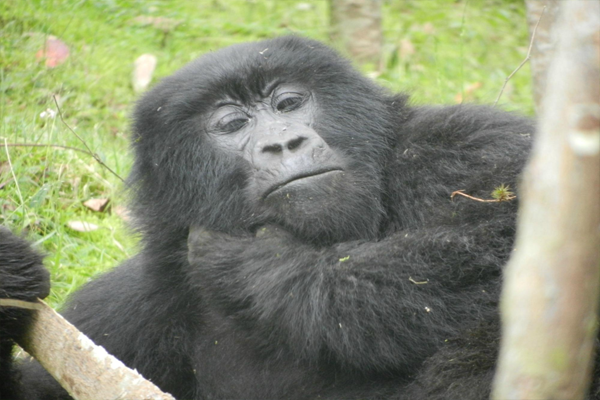
Why Are Mountain Gorillas Endangered? & Their Habitat Loss:
Habitat loss stands as the most pressing reason why mountain gorillas are endangered, driven relentlessly by deforestation from agriculture, mining, and logging in critical areas like the Virunga Mountains and Bwindi Impenetrable National Park.
Rapid human population growth in East Africa exacerbates this crisis, as expanding communities encroach on the gorillas’ montane bamboo forests and alpine meadows, which span altitudes from 2,200 to 4,300 meters.
Fertile volcanic soils tempt farmers to clear land for crops like potatoes and beans, fragmenting habitats into isolated pockets that limit gorilla movement and genetic exchange.
In Rwanda, for instance, farms border Volcanoes National Park, sparking frequent crop raids by mountain gorillas that fuel human-wildlife conflict—gorillas venture out for food only to face retaliation or further habitat clearance.
Visualize a shrinking map of mountain gorilla habitats: the Virunga massif, once a vast green expanse, now shows jagged edges eaten away by settlements, with Bwindi’s dense forest reduced by 20% since the 1990s due to charcoal production. Key statistics underscore the urgency:
-
Over 90% of mountain gorilla habitat lies within national parks, yet surrounding buffer zones vanish at 1-2% annually.
-
Mining for coltan and gold in DRC displaces families and destroys bamboo, gorillas’ primary food source.
Protected areas generate vital tourism revenue from gorilla trekking, channeling millions into anti-deforestation patrols and reforestation—Bwindi safaris alone contribute $20 million yearly to Uganda’s economy, sustaining ranger presence and community alternatives like beekeeping.
By booking a gorilla trekking Uganda or Rwanda gorilla tour, travelers invest in habitat security, proving eco-tourism as a powerful antidote to habitat destruction.
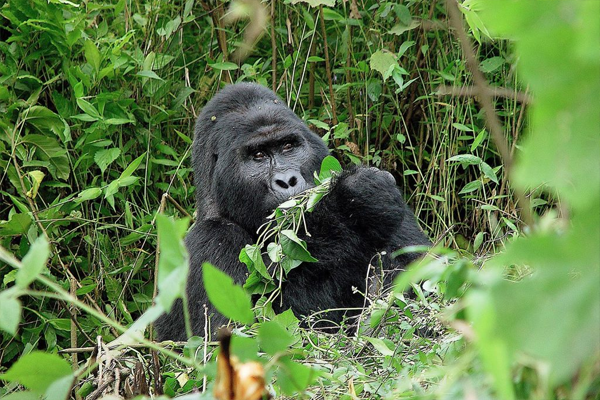
Poaching and Conflict
Poaching persists as a deadly threat explaining why mountain gorillas are endangered, even after their 2018 downgrade from critically endangered status.
Snaring for bushmeat and opportunistic live capture decimate troops, with snares—set for antelope—maiming gorillas who share the understory.
Political instability in the DRC’s Virungas amplifies this: wars displace rangers, enabling armed groups to fund operations through gorilla trafficking, though numbers have dropped sharply since peak losses in the 1990s.
Historical stats paint a grim timeline:
-
Pre-2000s: Numbers plummeted from 600+ to under 300 due to civil unrest and poaching spikes.
-
2000s patrols: 50% reduction in incidents via joint Uganda-Rwanda-DRC efforts.
-
2026 outlook: Enhanced tech like camera traps curbs snares by 70%.
Imagine a graphic timeline: red spikes in the 1990s, green recovery lines post-2010.
Ethical gorilla trekking boosts sales for anti-poaching—fees fund SMART patrolling (Spatial Monitoring and Reporting Tool), where communities earn more from tourism than snares. Your Virunga safari directly employs ex-poachers as guides, transforming threats into guardians.
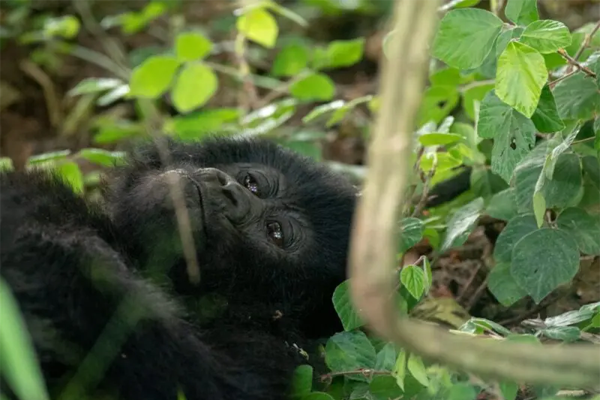
Disease Transmission
Disease transmission from humans poses a stealthy peril for why mountain gorillas are endangered, as close-range tourism and encroachment spread pathogens like flu, scabies, and Ebola.
Gorillas’ low genetic diversity—stemming from tiny populations—weakens immunity, making a common cold potentially lethal to silverbacks. In 2009, a measles outbreak in Virunga killed 10% of one troop, highlighting risks from unvaccinated visitors.
Mitigation strategies include mandatory vaccinations, 7-meter distancing rules during gorilla trekking, and habituation limits (one hour per group).
Protocols in Bwindi and Volcanoes National Park screen trekkers, reducing transmission by 80%.
At Rivo Safaris, as a safari operator, our itineraries enforce these for safe mountain gorilla encounters, blending adventure with responsibility—contact us today to trek ethically.
Population Trends
Mountain gorilla populations have rebounded impressively, yet vulnerabilities linger.
From fewer than 300 in the 1980s to over 1,000 by the 2018 census, they’ve grown at 3-4% annually, earning an “endangered” rather than “critically endangered” label. The next census, due in 2026, may confirm stability around 1,100 amid ongoing threats.
This hopeful trajectory includes caveats: isolated subpopulations risk inbreeding. Gorilla conservation efforts via tourism track these trends, ensuring your trek contributes to data that safeguards futures.
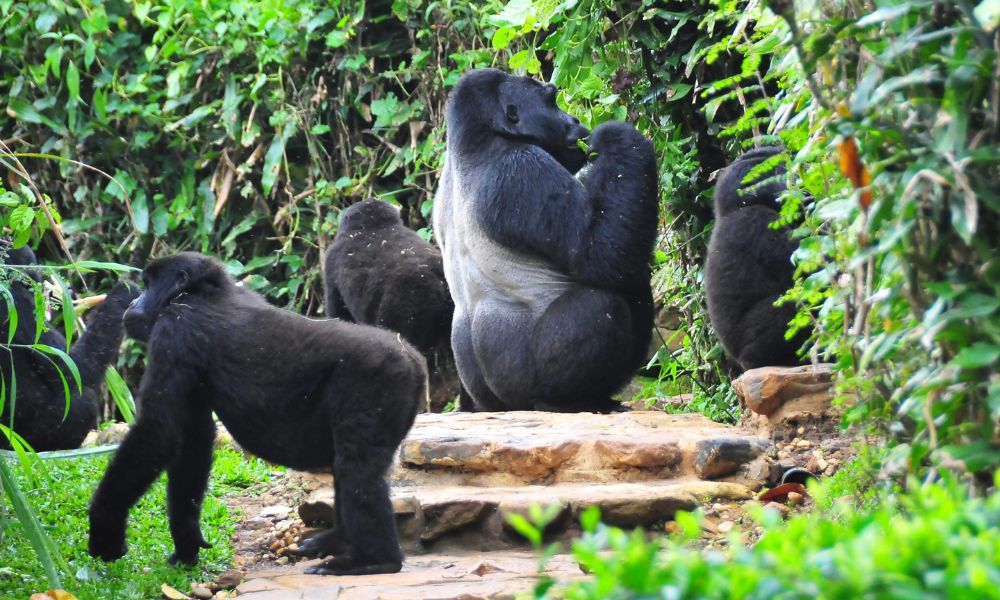
Conservation Successes
Conservation successes demonstrate why targeted action works against mountain gorilla endangerment. Community patrols, empowered by eco-tourism revenue (over $50 million yearly across parks), have slashed poaching.
Organizations like the African Wildlife Foundation (AWF) and International Gorilla Conservation Programme (IGCP) pioneer habituation, veterinary interventions (e.g., radio collaring), and education—yielding 3% growth from 2010-2016.
Key programs:
-
Bwindi Impenetrable Forest revenue-sharing: 40% of trek fees build schools, reducing encroachment.
-
Virunga joint patrols: 1,000+ rangers protect 400+ gorillas.
-
AWF’s anti-snaring dogs: 5,000 snares removed yearly.
Book gorilla treks today—your adventure funds these wins, boosting sales while multiplying impacts.
Future Threats and Solutions
Emerging future threats to mountain gorillas include climate change (altering bamboo cycles) and over-tourism straining habitats. Solutions demand corridor expansion between parks and sustainable safaris capping groups at 8.
Readers’ visits via our Uganda gorilla tours generate revenue for carbon offsets and eco-lodges, directly countering risks.
Frequently Asked Questions
Is gorilla trekking safe?
Yes, with protocols minimizing disease (98% success rate).
How does trekking help conservation?
Funds 70% of park budgets.
Best time for Rwanda/Uganda gorilla safaris?
June-September dry season.
Conclusion
Why mountain gorillas are endangered boils down to habitat pressures, poaching, and diseases—but recovery hinges on us. Join a safari—save gorillas. Book your gorilla trekking itinerary now for 2026 slots.