
Mountain Gorilla Population 2026: Recovery Stat, Latest Numbers, Trends & Conservation
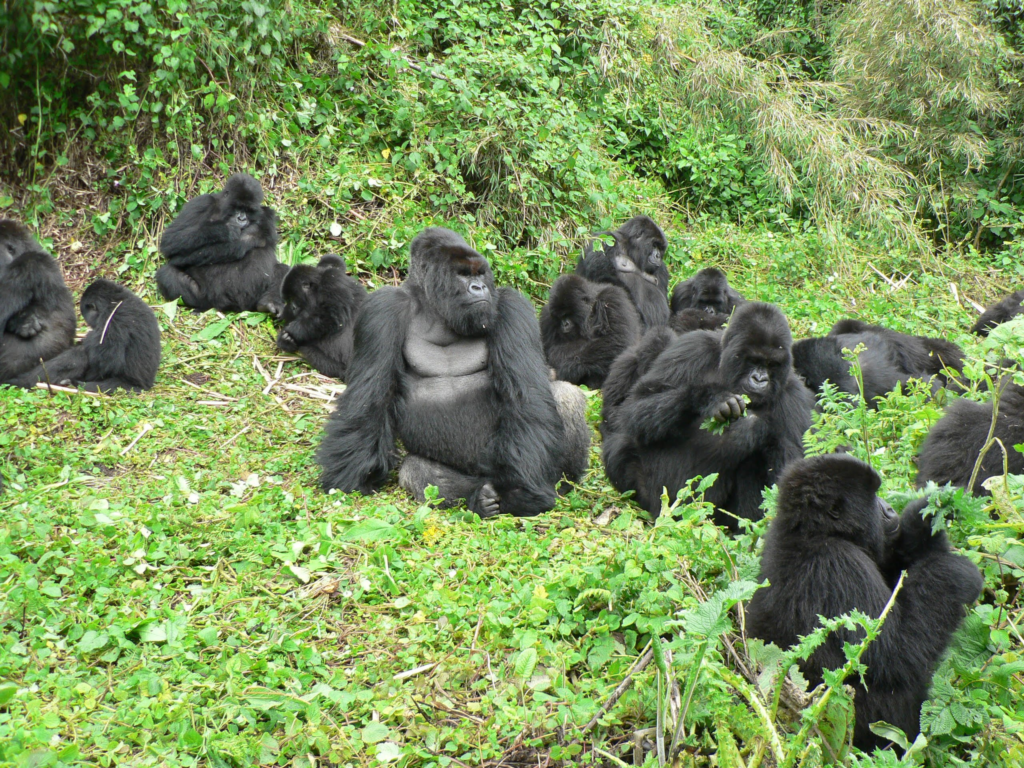
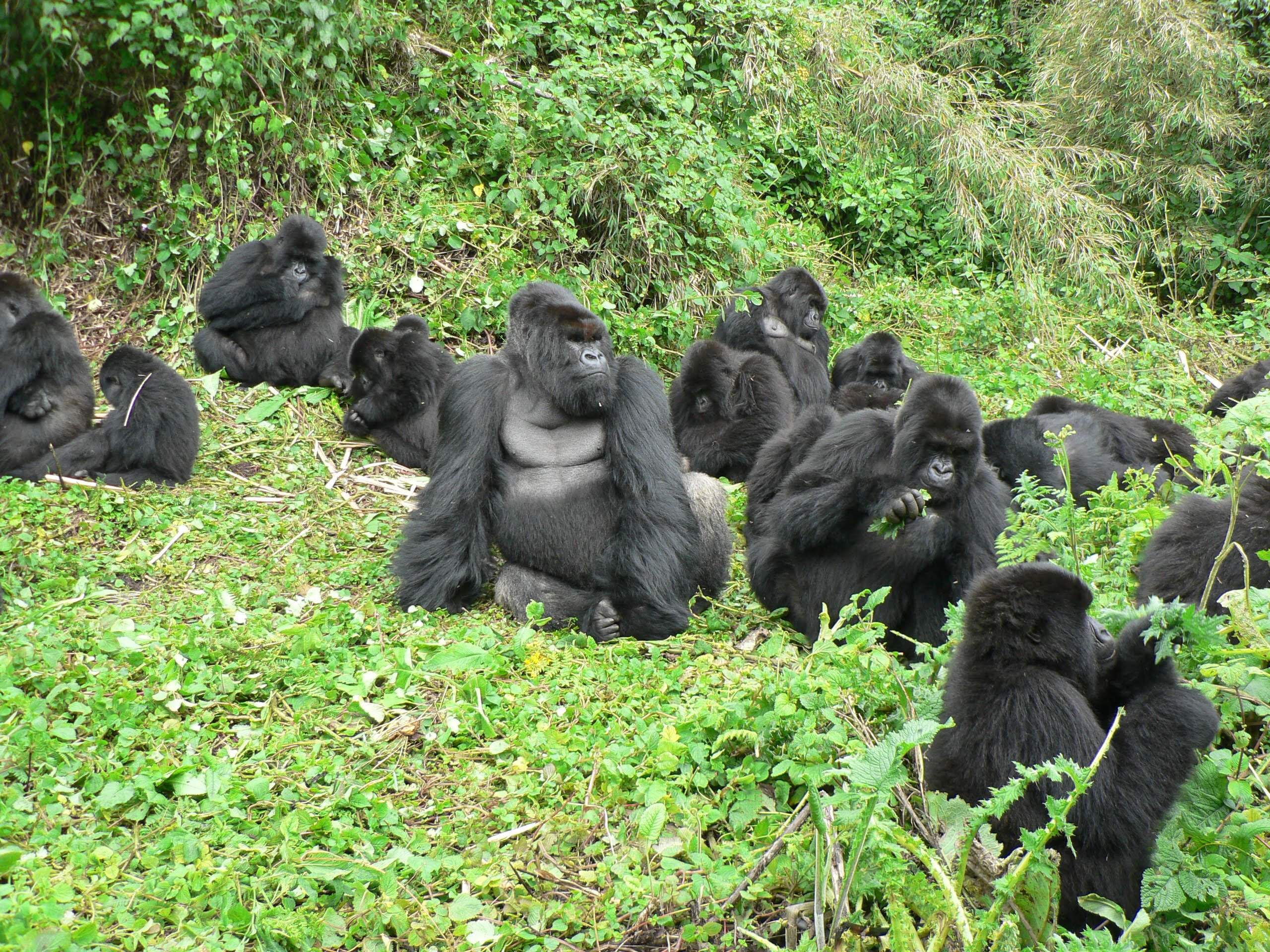
The mountain gorilla population has grown to over 1,000 individuals, making it the only great ape with increasing numbers. Found in Uganda, Rwanda, and DR Congo, these endangered primates thrive in protected forests like Bwindi and Volcanoes National Park.
Conservation efforts, anti-poaching patrols, and regulated gorilla trekking tourism have played a key role in boosting mountain gorilla population growth and long-term survival.
Mountain gorillas, one of the world’s most iconic endangered species, have staged a remarkable comeback that captures the imagination of wildlife enthusiasts, conservationists, and adventure travelers alike.
From a precarious low of just 254 individuals in 1981 to over 1,063 by the 2019 census, their mountain gorilla population growth reflects decades of dedicated efforts amid ongoing challenges.
This steady 1-6% annual increase offers hope, yet threats like habitat loss and human encroachment persist, making ethical gorilla trekking in Uganda and Rwanda more vital than ever for sustainable tourism and conservation funding.
In this comprehensive guide, we’ll dive into the current mountain gorilla population, historical trends, key threats, success stories, habitat insights, gorilla trekking experiences, future projections, and actionable ways to contribute—equipping you with everything needed to understand and support these majestic creatures.
Current Mounatin Gorilla Population Overview
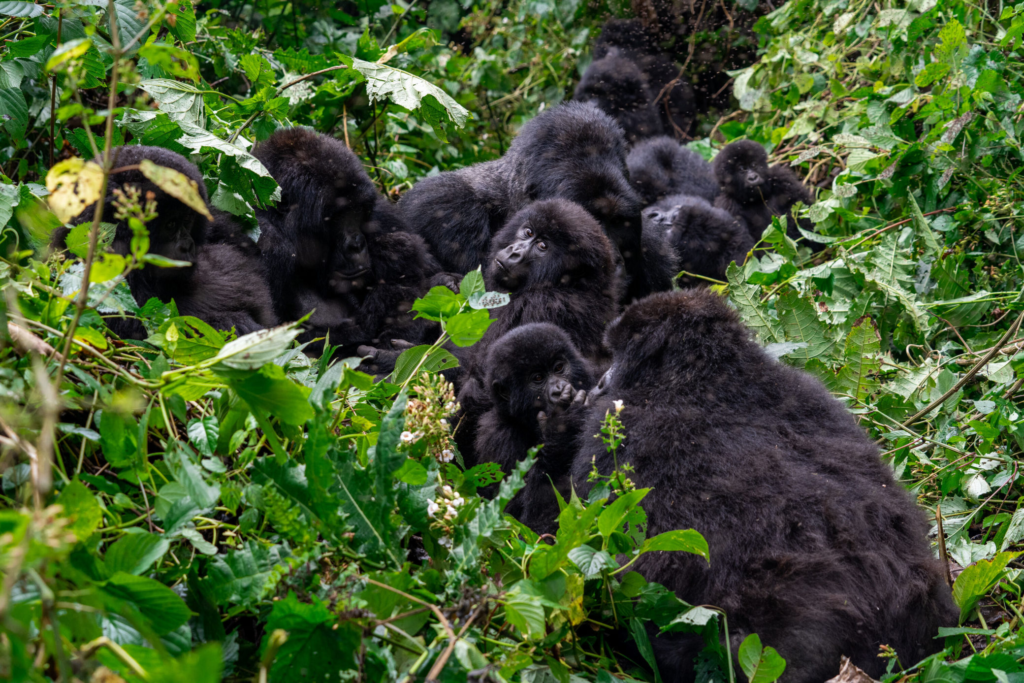
The mountain gorilla population today stands as a testament to resilience, primarily split between two key strongholds: the Virunga Massif (spanning Uganda, Rwanda, DRC) and the Bwindi-Sarambwe region (Uganda, DRC).
As of the latest comprehensive 2019 census, the total reached 1,063, with approximately 480 in the Virungas—an impressive 17% rise since 1989—and 583 in Bwindi.
This growth, tracked through meticulous biennial censuses by organizations like the International Gorilla Conservation Programme (IGCP) and African Wildlife Foundation (AWF), underscores a consistent 1-6% annual growth rate, driven by anti-poaching patrols and habitat protection.
To visualize this progress, consider the census trends in the table below, highlighting how strategic interventions have reversed decline:
Projecting to 2026, assuming a conservative 1% growth rate amid climate pressures, the mountain gorilla population could approach 1,150-1,200. Factors like reduced infant mortality (now at 70% survival rate vs. 50% historically) and family group stability contribute here.
In the Virungas, 604 square kilometers of habitat support 18 habituated groups, while Bwindi’s 327 square kilometers host 25 groups.
These numbers not only boost Bwindi gorilla population searches but also fuel gorilla trekking Uganda bookings, as tourists seek immersive encounters that fund protection—directly tying population health to your next safari adventure.
Mountain Gorilla Population Historical Decline and Recovery
The mountain gorilla population plummeted in the 1970s, halved by relentless poaching for bushmeat, trophies, and snares, compounded by regional wars in the Virungas that displaced rangers and enabled lawlessness.
By 1981, only 254 remained, teetering on extinction after decades of habitat fragmentation from agriculture and logging. This crisis peaked with the loss of silverbacks, disrupting family structures and accelerating decline.
A pivotal turning point arrived with the 1989 census, which galvanized global action: the IGCP (formed by WWF, Fauna & Flora, and AWF) launched intensive monitoring, while Rwanda’s Volcanoes National Park and Uganda’s Bwindi Impenetrable National Park fortified boundaries.
By 2006, populations surged 12%, thanks to community-based conservation sharing tourism revenues (up to 20% back to locals).
Key milestones include the 1990s snare removal campaigns, clearing thousands annually, and 2000s habituation programs generating $20 million+ in fees by 2019.
Wars in DRC (1990s-2000s) posed setbacks, yet cross-border collaboration persisted, with Virunga rebounding from war lows through ranger training.
Today, this recovery—over 300% growth since 1981—inspires mountain gorilla conservation success, drawing from queries like Virunga gorilla population trends and converting readers to ethical trekkers.
Key Threats Today
Despite triumphs, the mountain gorilla population faces persistent dangers that demand vigilant action, particularly as human populations encroach on their 800 square kilometer range.
Habitat loss tops the list: deforestation for farmland and firewood isolates groups, with Bwindi losing 1-2% cover yearly; this fragments ecosystems, increasing inbreeding risks in small groups of 8-25 members.
Disease transmission from tourists and locals is critical—scabies outbreaks in 2018 killed 10% of Virunga infants, while ebola proximity threatens respiratory vulnerabilities.
Human-wildlife conflict exacerbates issues:
-
Crop raiding: Gorillas venture into farms, sparking retaliatory killings (50+ incidents/year in fringes).
-
Poaching spillover: Snares for antelope ensnare gorillas (200+ rescues since 2000).
-
Climate change: Altered bamboo growth disrupts 50% of their diet, forcing altitudinal shifts.
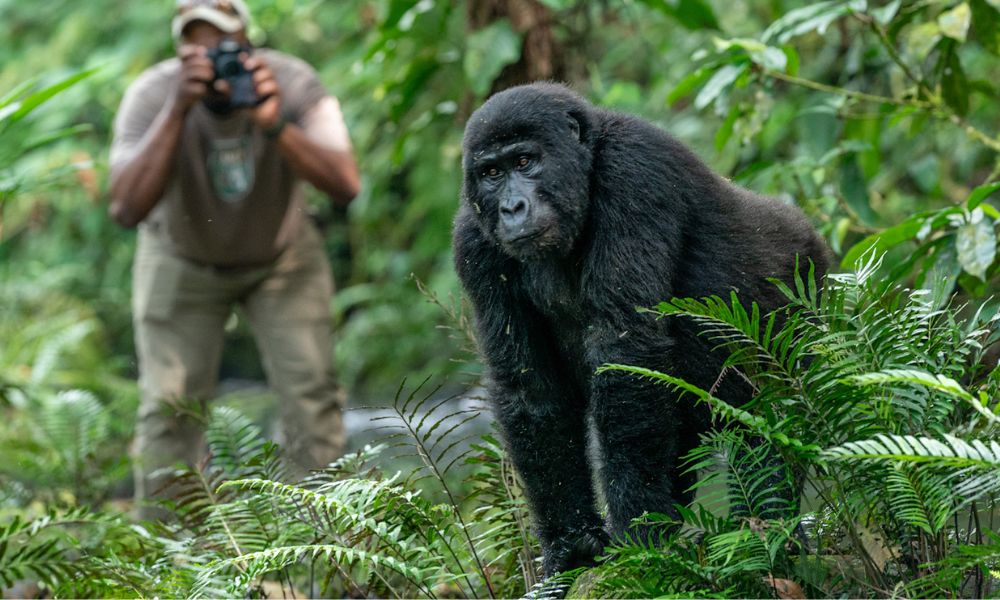
Ethical gorilla tourism counters these by funding ranger patrols (reducing threats 50%+) and revenue sharing, fostering local stewardship—vital for gorilla trekking Rwanda operators like yours to promote low-impact visits that protect while boosting sales.
Conservation Success Stories
Conservation has rewritten the mountain gorilla population narrative through collaborative triumphs led by IGCP, AWF, and partners.
Anti-poaching patrols, now daily with 1,000+ rangers, have slashed incidents by 50-70% in protected zones, crediting tech like camera traps and drones.
Community patrols empower 10,000+ locals via beekeeping alternatives to logging, yielding $1 million+ in hive revenues around Bwindi.
Notable wins include:
-
Virunga census accuracy: Biennial counts since 1973 enable precise interventions, boosting 26 families habituated safely.
-
Health monitoring: Veterinary teams vaccinate against scabies, achieving 90% recovery rates.
-
Revenue impact: $25 million from permits ( $1,500/person in Uganda) funds 80% of park operations.
As Rivo Safaris, a Uganda-based safari operator, we’ve witnessed firsthand how revenue sharing—distributing 20% of fees—builds buy-in, reducing conflicts 40% near our treks.
Programs like Gorilla Guardians train youth, ensuring legacy protection.
Habitat and Behavior Insights
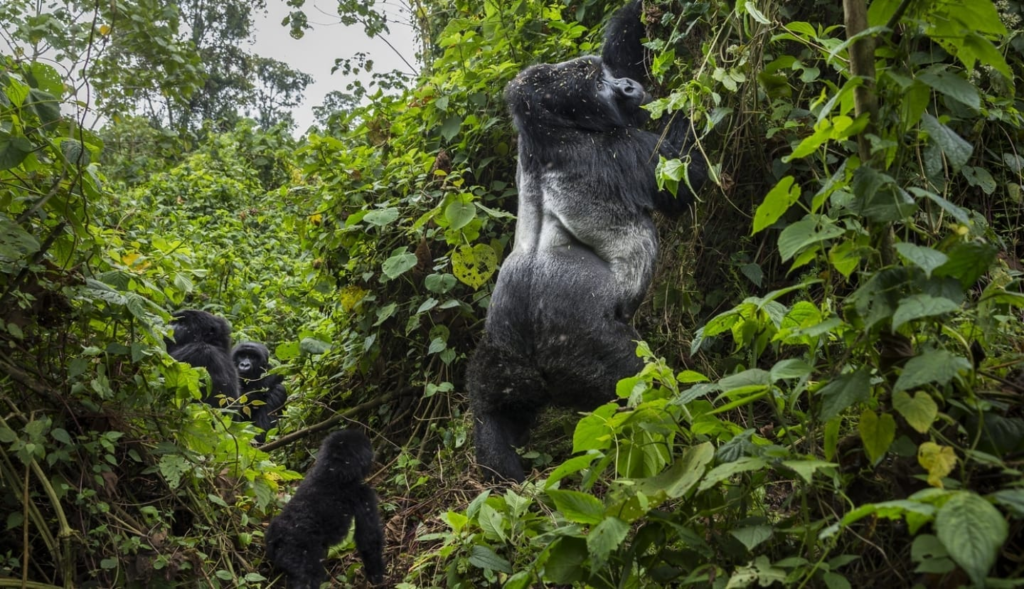
Mountain gorillas thrive in misty montane rainforests from 2,000 to 4,500 metres, with the Virunga volcanoes (Mikeno, Karisimbi) offering bamboo-rich slopes and Bwindi dense undergrowth teeming with wild ginger.
These 2,000+ plant species sustain their herbivorous diet (26 kg/day), favoring thistle and nettles.
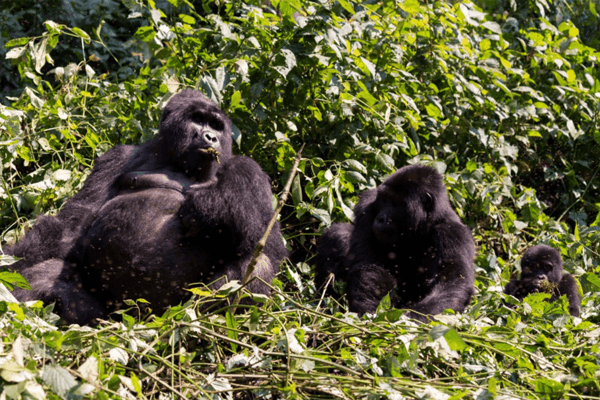
Socially, they form stable troops of 8-25, led by a dominant silverback who protects against rivals; females transfer groups for mating, birthing one infant every 4 years.
Daily life unfolds in nested routines: dawn foraging, midday nesting in bamboo, dusk travels (500m), showcasing 98% genetic similarity to humans. Infants cling maternally till 3 years, learning via play.
These insights engage wildlife enthusiasts searching Bwindi gorilla behavior, blending education
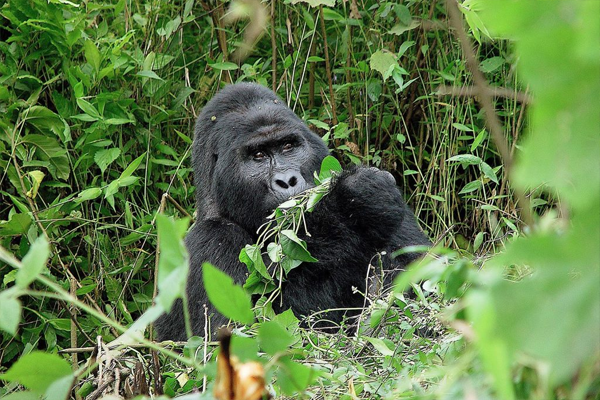
The image above captures a silverback’s vigilant gaze amid Bwindi’s ferns, epitomizing their gentle power.
Gorilla Trekking Experiences
Gorilla trekking Uganda and Rwanda immerses you in this recovery, with permits at $800 (Uganda) or $1,500 (Rwanda)—book 3-6 months ahead.
Best times: June-September dry season for clearer paths. Groups trek 2-7 hours, observing one hour from 7 meters, witnessing family bonds.
Our low-impact tours cap at 8 people/group, funding conservation while minimizing stress—perfect for photographers and families. Costs include guides, porters ($15/day tip), yielding unforgettable encounters that spike safari sales.
Future Projections and How to Help
Looking ahead, the mountain gorilla population is poised for continued growth if current conservation momentum persists, with experts projecting a rise to 1,200+ individuals by 2030 based on historical 1-6% annual increases observed since the 2019 census of 1,063.
This optimistic outlook assumes sustained anti-poaching efforts, habitat restoration, and climate adaptation strategies, potentially pushing numbers toward 1,500 by 2040 under ideal scenarios from organizations like the International Gorilla Conservation Programme (IGCP).
However, vulnerabilities loom: accelerated deforestation (projected 15% range loss by 2030 without intervention) and disease risks could cap growth at 1% annually, stalling at 1,100.
Modeling from Bwindi and Virunga data highlights key drivers—infant survival rates climbing to 80% through veterinary interventions and revenue from gorilla trekking funding 80% of park budgets—making tourism a linchpin for projections.
Your actions can directly influence these trajectories, turning awareness into impact for mountain gorilla conservation.
Here are actionable steps:
-
Book ethical gorilla treks: Permits ($800-$1,500) generate millions annually, with 20% revenue sharing empowering 10,000+ locals around Bwindi Impenetrable National Park and Virunga Massif to protect habitats over farming.
-
Donate strategically: Support IGCP or African Wildlife Foundation (AWF) for patrols reducing threats 50%+; even $50 funds snare removals safeguarding family groups of 8-25.
-
Advocate and educate: Like this on social media to amplify gorilla population recovery stories, driving traffic and bookings to operators promoting low-impact tours.
-
Choose sustainable operators: Opt for Uganda/Rwanda treks capping groups at 8, minimizing stress during one-hour encounters from 7 meters.
Rivo Safaris as a Uganda-based safari expert, I urge booking your gorilla trekking Uganda adventure today—secure permits today. Contact us to witness silverbacks thriving and contribute to a future where mountain gorillas number in the thousands.
This isn’t just travel; it’s legacy-building for endangered species recovery for mountain gorilla population 2026 queries.
Frequently Asked Questions
How many mountain gorillas are left now?
The global Mountain gorilla population is estimated at just over 1,060 individuals. They live in two main regions: the Virunga Mountains and Bwindi Impenetrable National Park.
This makes them one of the rarest great apes, but also the only gorilla subspecies currently increasing in number thanks to strong conservation protection, veterinary care, and controlled tourism programs.
Why are mountain gorillas increasing in population?
The Mountain gorilla population is increasing due to intensive conservation efforts. These include anti-poaching patrols, habitat protection, veterinary interventions, and regulated gorilla trekking tourism.
Revenue from tourism supports conservation and local communities, reducing human-wildlife conflict. Strong government partnerships in Uganda, Rwanda, and DR Congo have also played a major role in ensuring their survival and steady population growth.
Which country has the most mountain gorillas?
Uganda has the largest population of Mountain gorilla, with more than half of the world’s total living in Bwindi Impenetrable National Park. The country is considered the top destination for gorilla trekking.
Rwanda and DR Congo also host significant populations, mainly within the Virunga conservation area shared across the three countries.
How many gorillas are left in Uganda?
Uganda is home to over 500 Mountain gorilla, mostly found in Bwindi Impenetrable National Park and a smaller number in Mgahinga Gorilla National Park.
This makes Uganda the leading stronghold for the species. Continuous conservation, strict park management, and sustainable tourism have helped maintain and grow the gorilla population within the country.
What is the mountain gorilla population in 2026?
Estimated 1,100-1,200, up from 1,063 in 2019 via 1-6% growth.
Where are most mountain gorillas found?
Bwindi (583) and Virunga Massif (480)—prime for gorilla trekking.
Conclusion
The mountain gorilla population stands as a beacon of hope in wildlife conservation, surging from a dire 254 individuals in 1981 to over 1,063 by 2019, with projections nearing 1,200 by 2026 thanks to relentless efforts against poaching, habitat loss, and disease.
This remarkable recovery in Bwindi and Virunga Massif—fueled by organizations like IGCP and AWF, plus ethical gorilla trekking revenues—proves that targeted action works, yet ongoing threats demand our commitment to secure a thriving future for these gentle giants.
Ready to witness this success firsthand and make an impact? Book your gorilla trekking adventure with Rivo Safaris today! Secure your $800 Uganda permit for an unforgettable, low-impact encounter—visit rivo-safaris.com/book-now now to join the conservation story and create memories that last a lifetime.
Your trek directly funds protection for family groups of 8-25, boosting local communities while topping mountain gorilla population searches. Act now—spaces fill fast!