
Mountain Gorilla Food: Diet & Eating Habits Ultimate Guide 2026
Mountain gorilla food powers one of nature’s most majestic creatures, the mountain gorilla (Gorilla beringei beringei), a critically endangered primate found only in the misty highlands of East Africa.
Imagine a 400lb silverback devouring up to 30kg of wild greens daily—that’s mountain gorilla food fueling the world’s rarest primate, with just over 1,000 individuals left in the wild.
Their herbivorous diet, dominated by over 140 plant species, is perfectly adapted to the dense forests of Bwindi Impenetrable National Park in Uganda and the Virunga Mountains spanning Rwanda, Uganda, and the Democratic Republic of Congo.
This mountain gorilla diet—86% foliage, 7% roots and stems, 2-3% fruits, and trace insects—not only sustains their massive frames but also offers trekkers an unforgettable glimpse into their foraging routines.
At Rivo Safaris, as a Kampala-based African safari tour operator specializing in gorilla trekking and wildlife in Uganda, I’ve witnessed how understanding mountain gorilla food transforms a simple hike into a profound wildlife adventure.
Ready to witness mountain gorillas eating up close? Book your gorilla trekking tour today and boost your East African safari with this essential insight into their daily eating habits.
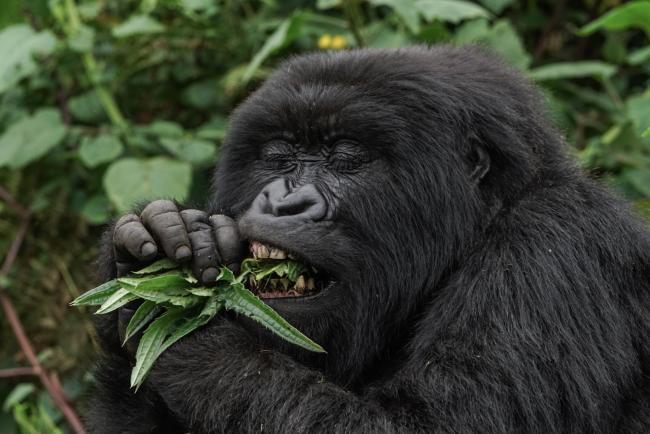
This photo captures a gorilla family foraging, highlighting their leafy staples like wild celery and bamboo shoots in the lush Bwindi forests of Uganda.
Mountain Gorilla Food Core Diet Breakdown
The mountain gorilla diet is a finely tuned herbivore’s menu, with mountain gorilla food sourced almost entirely from their high-altitude habitats between 2,000-4,000 meters.
Unlike fruit-heavy lowland gorillas, mountain gorillas thrive on fibrous vegetation that requires constant foraging, processing up to 200kg of food weekly per individual.
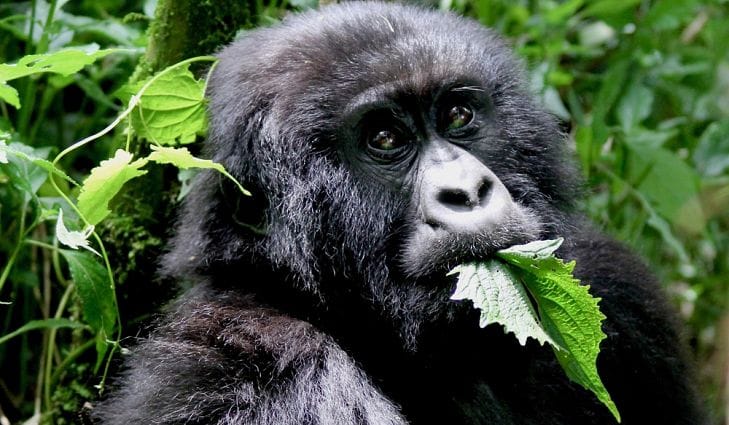
Primary foods (86%) include tender leaves, juicy shoots, soft pith, climbing vines, and resilient grass species—wild celery (Galium spp.) provides hydration and minerals; stinging nettles (Urtica spp.) deliver protein-rich foliage; and bamboo shoots reign supreme in Bwindi National Park, where silverbacks strip culms with powerful jaws.
These staples ensure energy for their semi-nomadic lifestyle amid steep slopes and bamboo thickets.
Roots and stems (7%) serve as mineral powerhouses and favorites like bamboo pith, a creamy delicacy that mountain gorillas excavate with precise finger dexterity; wild ginger roots offer fallback nutrition during scarcity, packed with anti-parasitic compounds vital for their gut health.
Meanwhile, fruits and flowers (3-5%) are rare luxuries due to the cool, equatorial montane climate—thistle flowers, seasonal berries, and occasional wild figs (Ficus spp.) provide sugars when available from forest edges, though mountain gorilla food diversity drops at higher elevations.
Even protein sources (2-3%) lean plant-based, with opportunistic termites, ants, and grubs extracted by smashing nests, supplemented by soil and volcanic ash for sodium and digestion aid—their massive 4kg gut microbiome ferments cellulose into usable energy.
Here’s a clear breakdown of the mountain gorilla diet composition:
This mountain gorilla food variety underscores their adaptability, making gorilla trekking a prime opportunity to observe these behaviors firsthand.
Mountain Gorilla Food Daily Consumption & Foraging
Mountain gorillas dedicate 6-8 hours daily to foraging, consuming 18-30 kg of mountain gorilla food—silverbacks tip the scale at 30-40 kg/day to maintain their 400 lb bulk, while females and juveniles eat 18-25 kg.
This voracious appetite equates to one-third of their body weight, chewed over 16 hours with specialized molars grinding the fibrous mountain gorilla diet into digestible pulp.
Foraging patterns shift seasonally: in the dry season (June-September), they target bark, seeds, and water-rich stems for hydration amid sparse foliage; wet seasons explode with tender shoots, accelerating intake to 50kg/day peaks.
Key foraging facts:
-
Silverbacks lead: They select mountain gorilla food patches, protecting the group while eating 15% more than others.
-
Group dynamics: Families of 5-30 cover 1-2km daily, revisiting 120 plant species selectively.
-
Subspecies contrast: Lowland gorillas devour 25% fruit vs. mountain gorillas’ 3%, reflecting habitat differences.
These habits reveal the mountain gorilla eating routine as a survival ballet—energy spent foraging equals energy gained, with minimal waste. On a Uganda gorilla trek, you’ll see this rhythm unfold, amplifying the thrill of your Bwindi safari.
Habitat Impact on Diet
Mountain gorilla food availability hinges on their exclusive habitats: Bwindi Impenetrable Forest (Uganda) boasts 140+ plant species across 327km², while Virunga Volcanoes (Rwanda/Uganda/DRC) offer bamboo-dominated slopes in 400km².
Bwindi’s hyper-diverse understory fuels nettles and celery, but Virunga’s higher altitudes limit fruits, pushing reliance on roots.
Human encroachment—deforestation for agriculture—slashes food sources by 20-30% near boundaries, forcing gorillas deeper into core zones and heightening conflict.
Conservation ties directly to mountain gorilla diet: protected areas like Bwindi National Park sustain 600+ individuals through anti-poaching and habitat buffering, yet climate shifts threaten bamboo regeneration.
As a Kampala-based safari operator, I’ve seen mountain gorillas adapt in Bwindi, shifting to fallback vines during dry spells—ecotours fund these efforts.
Join an eco-friendly gorilla trek to support wildlife conservation in Uganda while exploring mountain gorilla food in action.
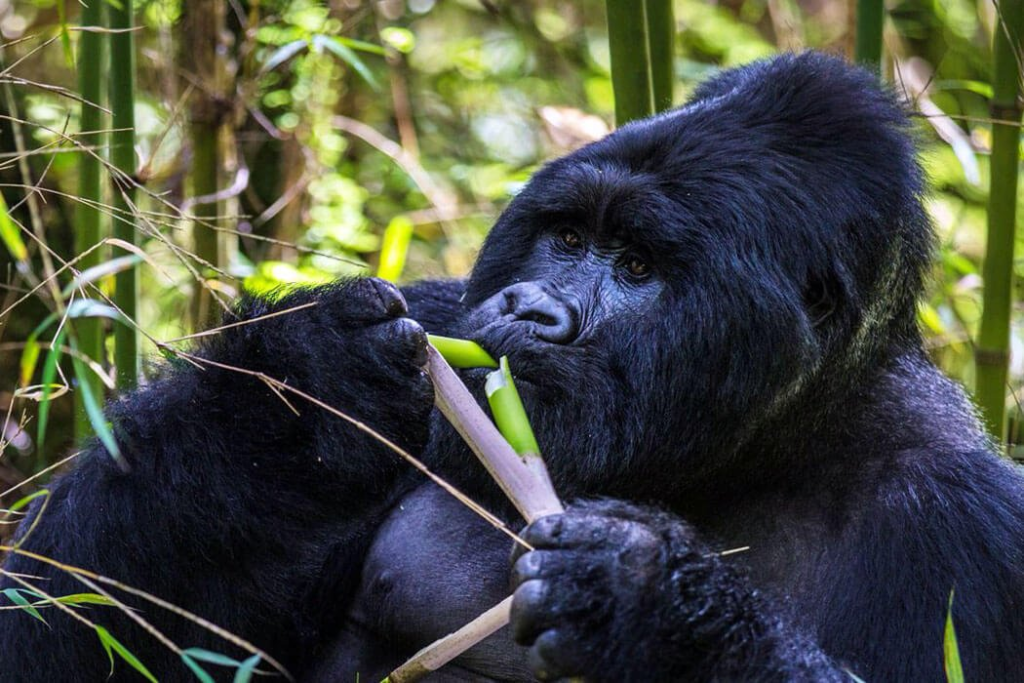
Gorillas stripping bamboo in Bwindi showcases adaptive foraging, key to their survival amid habitat pressures.
Trekking Insights
Spotting mountain gorillas eating elevates gorilla trekking in Uganda to must-do status—best time June-September for dry trails and peak foliage viewing in Bwindi or Mgahinga.
Expect 1-hour treks (up to 7km steep hikes) to habituated families, where you’ll watch silverbacks munch bamboo just metres away, their 30kg daily feasts unfolding in real-time.
Safety first: Maintain a 7m distance, use no flash photography, and follow porter-guided paths; altitude sickness hits unprepared trekkers, so acclimatise with hydration.
What to expect:
-
Hour 1: Track fresh dung and chewed stems signaling mountain gorilla food trails.
-
Prime viewing: 4-6 hours observing foraging behaviors, nests built from eaten vines.
-
Post-trek: Debrief with guides on diet insights, tying to conservation.
Book your gorilla food trail tour today—limited 2026 permits mean high demand for this African safari highlight!
Frequently Asked Questions
What do mountain gorillas eat most?
Foliage (86%)—leaves, stems, and shoots form the bulk of their mountain gorilla diet.
How much mountain gorilla food daily?
Up to 30 kg for adults, fuelling their massive energy needs.
Do mountain gorillas eat meat?
No, they’re strict herbivores, with trace amounts of insects for protein.
What’s the best place to see gorilla feeding?
Bwindi National Park—book now for Uganda treks!.
Conclusion
The mountain gorilla food story is a survival epic—86% foliage, adaptive foraging, and habitat ties fueling Earth’s gentle giants. From Bwindi bamboo feasts to Virunga vine strips, this diet captivates trekkers worldwide.
Reserve your Uganda safari today for immersive gorilla trekking! Bookmark our page for safari itineraries and 2026 permit alerts below. Turn curiosity into adventure—boost your wildlife journey with us!