
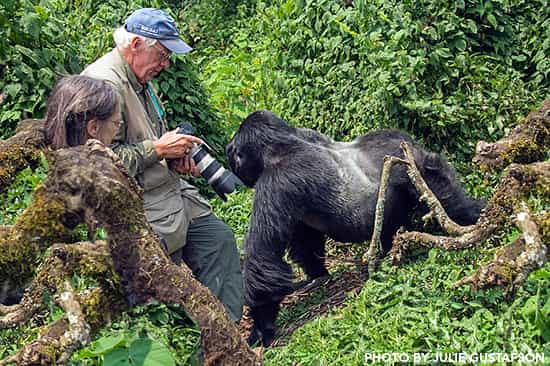
How Big Are Silverback Gorillas? Size, Weight & Strength Guide 2026
How Big are Silverback Gorillas?: Silverback gorillas, the powerful leaders of mountain gorilla troops, captivate wildlife enthusiasts and safari dreamers alike with their imposing size and raw strength.
Did you know a silverback gorilla can weigh as much as three average men combined and stand taller than most basketball players? People search for “how big are silverback gorillas” because these majestic creatures symbolize nature’s ultimate display of dominance, blending brute force with gentle family leadership—perfect for anyone planning a gorilla trekking safari in Uganda or Rwanda.
In this detailed guide, you’ll get a quick answer on silverback size, weight, and strength, plus comparisons to humans, lions, and other animals, evolutionary reasons behind their mass, and tips on seeing them up close in Bwindi Impenetrable Forest or Volcanoes National Park.
Whether you’re curious about silverback height, arm span, or how they stack up against lowland gorillas, this breakdown delivers facts, tables, and visual ideas to fuel your fascination and inspire your next adventure.
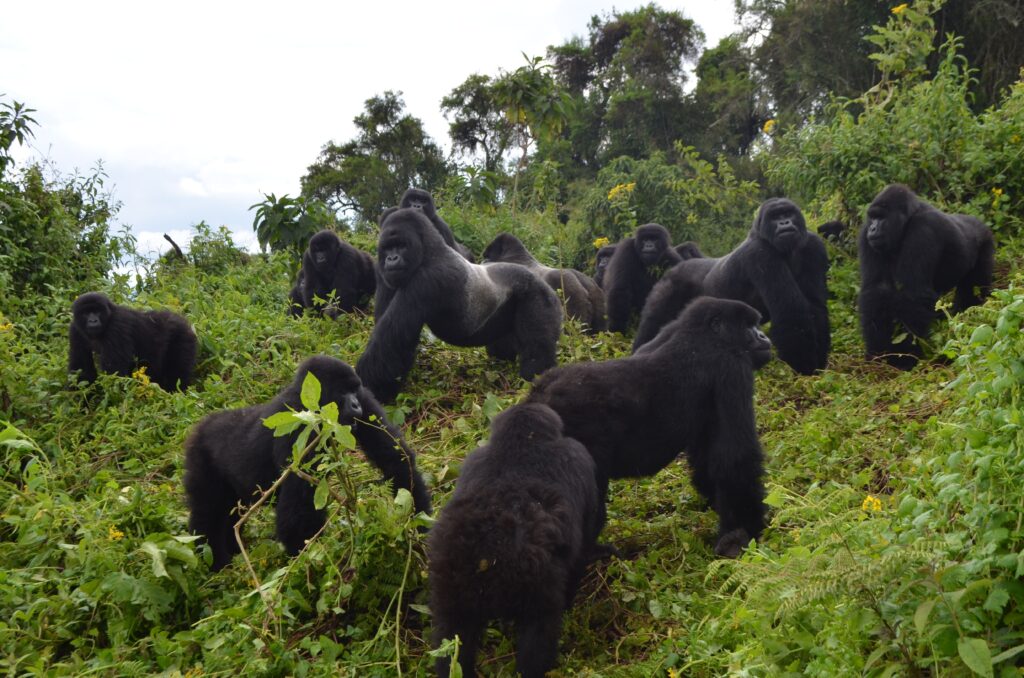
How Big Are Silverback Gorillas?
For those wondering “How big are silverback gorillas?”, here’s the quick answer: An adult male silverback gorilla stands 1.4–1.8 metres (4.6–5.9 feet) tall when upright, measures around 1 metre at the shoulder on all fours, and boasts an arm span up to 2.6 metres (8.5 feet).
Their weight typically ranges from 140 to 220 kg (308 to 485 lbs), with some exceptional individuals pushing 250 kg in the wild. These stats make silverbacks the largest living primates, dwarfing females who average half the size.
Key measurements at a glance:
These figures come from field studies in mountain gorilla habitats like Bwindi and the Virunga Volcanoes, where silverbacks evolved massive builds for protection.
Silverback size varies slightly by subspecies and environment—wild ones often bulkier than captives due to constant foraging. A silverback gorilla’s size commands respect, as their strength lets them uproot saplings or charge intruders effortlessly.
If you’re measuring for a safari mental image, picture a silverback towering over guides during a trek, chest-beating to assert dominance.
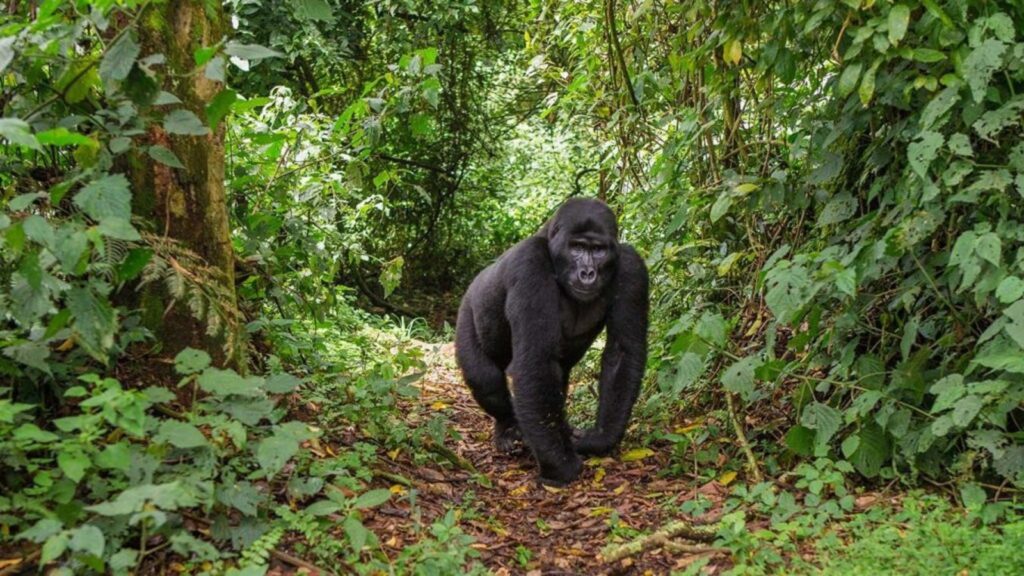
Average Size vs Maximum Size
While the average silverback gorilla tips the scales at 160–180 kg with a 1.65 m standing height, maximum size records push boundaries: the largest verified wild silverback reached 1.95 m (6.4 ft) tall and over 220 kg.
Typical dominant males in troops hit these peaks after age 15, while younger silverbacks (12–15 years) might only reach 120–150 kg, still formidable but less bulked for leadership challenges.
Wild vs captive differences are stark—wild mountain gorillas average 10–20% heavier due to high-fibre diets and muscle from terrain navigation, whereas zoo silverbacks often slim down from softer lives, maxing at 180 kg without the same evolutionary pressures.
-
Average: 1.65 m height, 170 kg weight—common in prime troop leaders.
-
Maximum: 1.95 m height, 250 kg (e.g., famous “Titus” silverback lineage in Rwanda).
-
Younger males: 1.4–1.6 m, 130 kg—building mass through foraging.
This variance underscores why “silverback gorilla size” searches spike: adventurers want to know what they’ll encounter on a gorilla trekking Uganda or Rwanda.
Larger silverbacks dominate multi-male groups, using size to fend off rivals, while smaller ones bide time as “blackbacks”. Captive studies show diet tweaks can boost size, but nothing rivals wild silverback strength honed by survival.
How Strong Is a Silverback Gorilla?
A silverback gorilla‘s strength is legendary—estimated at 5–10 times that of an average human male, capable of lifting 800–1,000 kg (1,760–2,200 lbs) briefly, bending steel bars, or snapping bamboo like twigs.
Their bite force clocks 1,300 PSI (pounds per square inch), over twice a lion’s 650 PSI, shredding tough vegetation or foes with 48 teeth, including massive canines up to 5 cm.
Pound for pound, silverback muscle density exceeds humans, with fast-twitch fibers powering explosive charges at 40 km/h (25 mph).
-
Lifting power: Deadlift equivalent of 4–5 grown men; observed tossing 200-kg logs.
-
Punching force: ~6x a heavyweight boxer’s, fracturing skulls if needed.
-
Endurance: Hours of foraging/climbing despite bulk.
This silverback gorilla strength evolved for harem defense, not show—males patrol territories up to 25 sq km. During gorilla safaris, witnesses report silverbacks uprooting trees single-handedly, a demo of why poachers fear them.
Compared to chimps (stronger per kg but lighter), silverbacks win in absolute power.
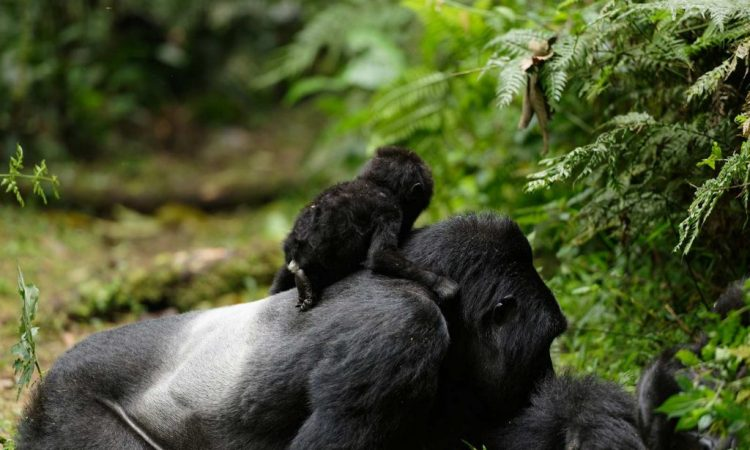
Silverback Gorilla Size Compared to Humans
Stack a silverback gorilla against humans, and the gap is humbling: at 1.7 m tall and 200 kg, they outheight 90% of men (average 1.75 m) while tripling their 70 kg weight, with arm spans reaching 2.6 m vs human 1.8 m.
A silverback chest spans 1.5 m, broader than most bodybuilders, packing muscle mass equal to 10 strongmen.
Visual comparison chart idea:
Humans might edge in height, but silverback reach and density dominate grapples.
Imagine a silverback looming over a 1.8 m athlete—pure primate supremacy, ideal for Bwindi gorilla trekking awe.
Silverback Gorilla vs Other Animals
Silverback gorillas eclipse many beasts: bigger than lions (1.2 m shoulder, 190 kg) with double the upper body strength, though lions have speed/claws for kills.
Silverback gorillas vs chimpanzees (1.2–1.7 m, 40–60 kg): silverbacks are 4x heavier and stronger absolutely, but chimps win agility. Human athletes like Hafþór Björnsson (2 m, 200 kg) match weight but lack gorilla muscle efficiency—silverbacks climb sheer cliffs effortlessly.
-
Vs Lion: Silverback bigger/stronger upper body; lion faster, pack hunter.
-
Vs Chimp: Silverback dominates size/strength; chimp fiercer bite per kg.
-
Vs Grizzly Bear (300 kg): Comparable, but silverback arboreal edge.
In habitats, mountain silverbacks rule forests unchallenged. This fuels “silverback vs lion” debates, drawing safari clicks—book Virunga treks to judge live.
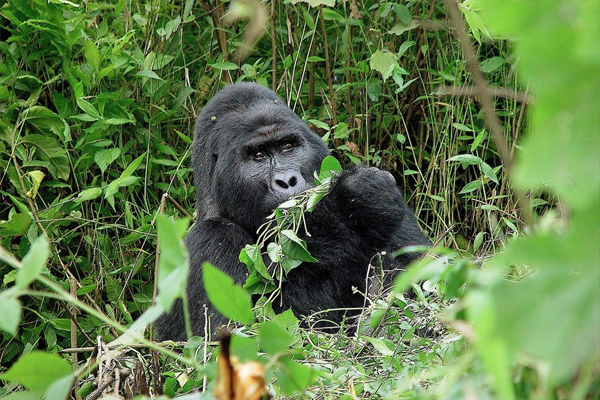
Mountain Gorilla vs Lowland Gorilla Size
Mountain gorilla silverbacks dwarf western lowland cousins: 180–220 kg and 1.7 m tall vs 140–180 kg, 1.6 m for lowlands, thanks to colder Virunga/Bwindi habitats demanding thicker fur/builds.
Mountain gorillas have stockier frames and longer arms for high-altitude foraging; lowlands are slimmer for swamp mobility.
-
Weight: Mountains are 30–40 kg heavier.
-
Build: Mountains have broader chests; lowlands have elongated snouts.
-
Habitat impact: Altitude boosts size via richer vegetation.
The eastern lowland (extinct in the wild) hit 220 kg too. For Uganda gorilla safaris, mountain silverbacks offer the biggest thrill.
Why Are Silverbacks So Big?
Silverbacks ballooned via evolution: sexual selection favors giants for mating dominance, vegetarian diets (high-volume leaves/shoots) fuel mass, and group protection demands strength against leopards/rivals.
Genes like MYH16 enhance jaw/muscle power; silverback role as sentinel burns calories, building bulk.
Habitat abundance in Bwindi supports 30 kg daily intake. This size adaptation ensures troop survival—prime for Rwanda gorilla trekking observation.
What Does “Silverback” Mean?
“Silverback” labels mature male gorillas (15+ years) with silver-tipped hair on their domed backs, signaling breeding rights and leadership. They guide 10–20 member families, forage first, and defend fiercely, earning respect from females/offspring.
This badge of maturity appears post-puberty, marking troop bosses. Spot it on Volcanoes National Park safaris.
Can Humans Be Bigger or Stronger?
No human matches silverback combo: bodybuilders like Ronnie Coleman hit 140 kg but with steroids/water, paling against natural gorilla density (twice human). Silverbacks lift more raw weight sans gear, with bone structure for power.
-
Bodybuilder max: 150 kg lean; silverback 200+ kg functional.
-
Muscle edge: Gorilla fibers 67% stronger per sq cm.
Safaris prove: nature trumps gyms.
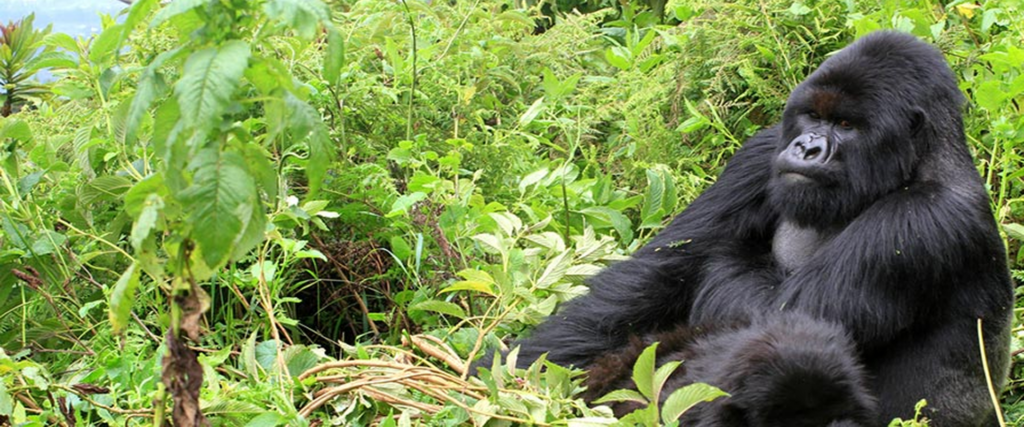
Where Can You See Silverback Gorillas?
Encounter silverback gorillas in Bwindi Impenetrable Forest (Uganda)—home to ~500 habituated troops—or Volcanoes National Park (Rwanda) with Virunga giants.
Permits (~$800–$1,500) fund conservation; trek 2–7 hours for 1-hour views.
Book your gorilla trekking safari experience today—limited slots boost exclusivity and sales. Contact for custom Uganda/Rwanda itineraries!
Interesting Facts About Silverbacks
Silverbacks devour 30 kg vegetation daily (18 kg for humans is equivalent), lead stable family groups for 20+ years, and balance ferocity with tenderness—nursing young gently.
They communicate via 400+ vocalisations and sleep in nests nightly. Must-sees on Bwindi safaris.
Frequently Asked Questions
How tall is a silverback gorilla standing?
1.4–1.8 m (4.6–5.9 ft)—towering over most humans.
How much does a silverback weigh?
140–220 kg (308–485 lbs), with records over 250 kg.
Are silverbacks dangerous?
Rarely to humans; charges are bluffs during ethical treks.
How strong is a silverback compared to a human?
5–10x stronger, lifting 800+ kg effortlessly.
Conclusion
Silverback gorillas stun with 1.7 m height, 200 kg weight, and superhuman strength—evolutionary marvels ruling misty forests. From crushing bamboo to leading families, their size and power fascinate, drawing “how big are silverbacks” searches worldwide.
Fuel your wonder: book a gorilla trekking safari in Bwindi or Volcanoes now and witness majesty, support conservation, and create lifelong memories. Adventure awaits!