
Silverback Gorilla Weight: How Big Are They? 2026 Guide
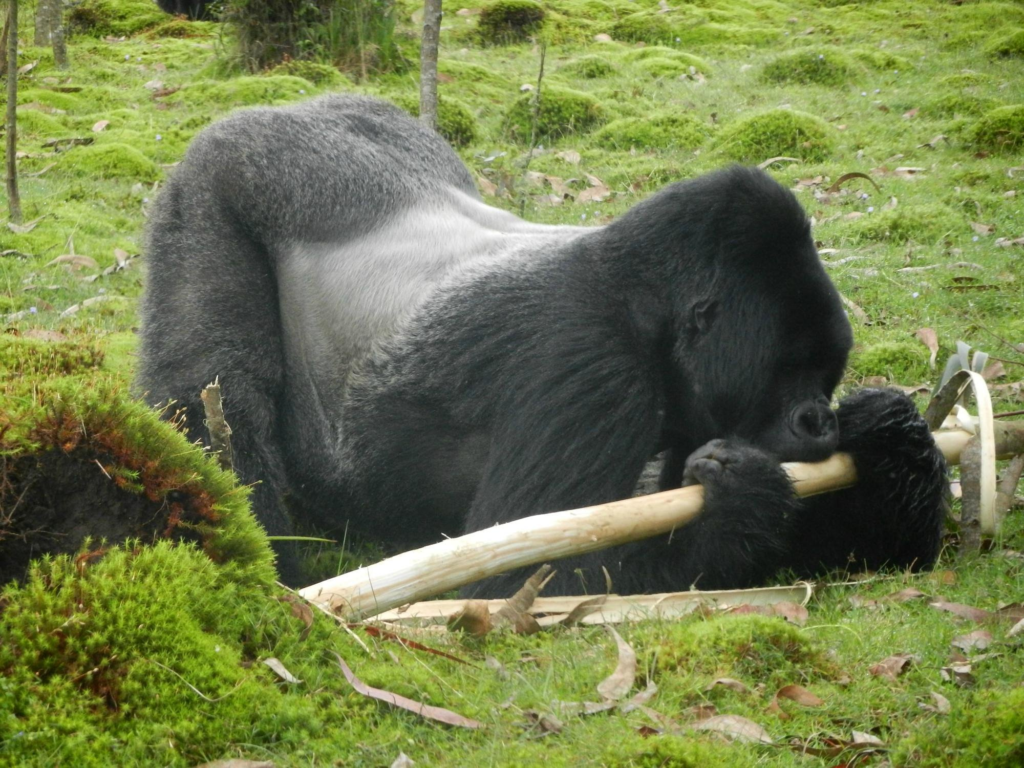
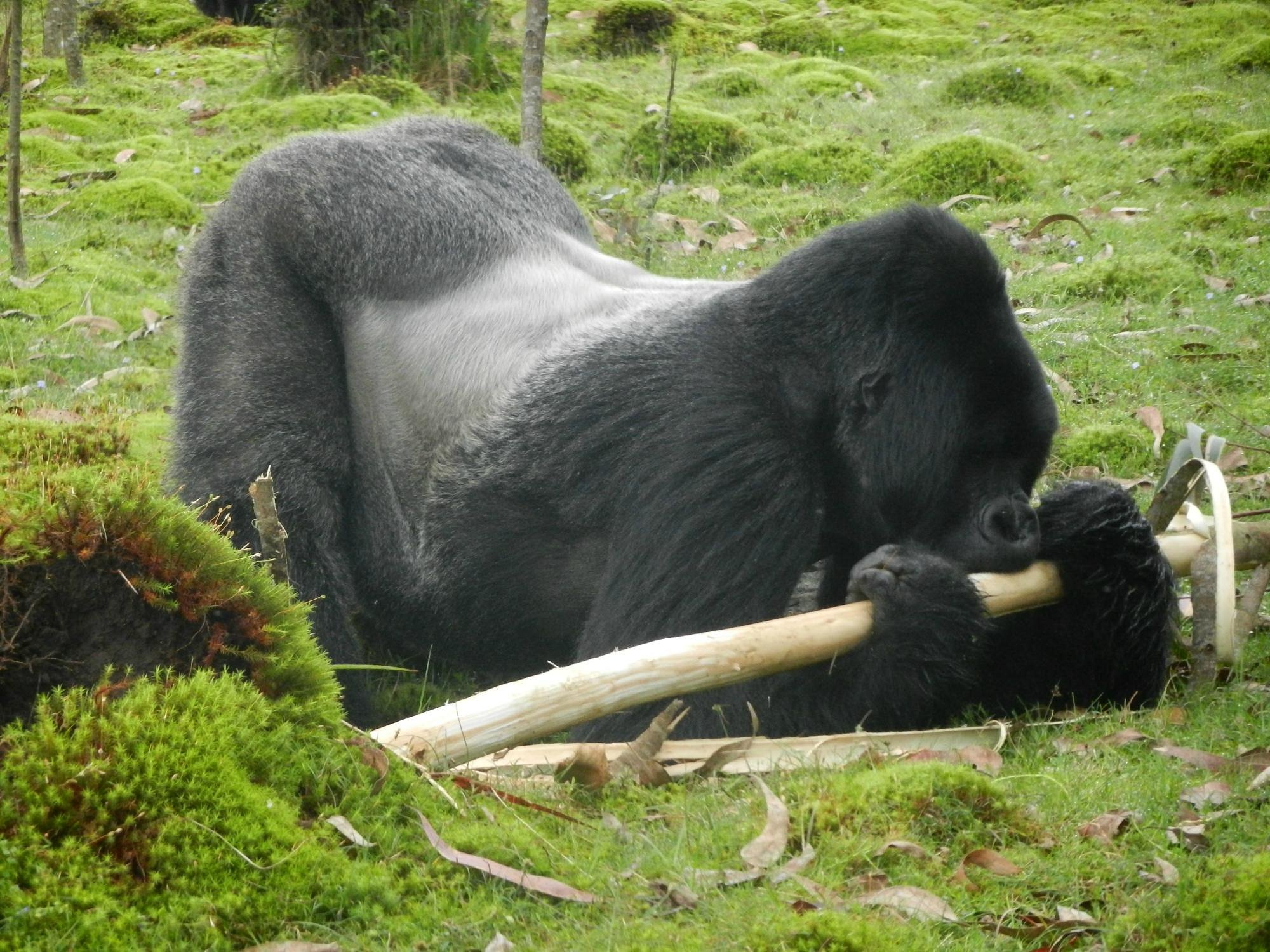
Silverback Gorilla Weight: A fully grown silverback gorilla can weigh more than 200 kg, towering over humans with raw power that captivates wildlife enthusiasts and safari-goers alike.
As the dominant males of mountain gorilla troops, silverbacks command respect through their massive size, protective instincts, and sheer physical presence, making them icons of strength in the wild.
People are fascinated by silverback gorilla weight because it symbolizes untamed nature—far exceeding average human males at just 80-90 kg—sparking curiosity about how these gentle giants maintain such bulk on a plant-based diet while defending families in rugged African forests.
This article dives deep into how big are silverbacks, exploring their weight variations, comparisons, strength, and why seeing one on a gorilla trekking safari in Uganda or Rwanda is a bucket-list adventure that supports conservation.
Whether you’re planning a trip to Bwindi Impenetrable Forest or Volcanoes National Park, understanding silverback gorilla weight reveals why these endangered primates are worth protecting.
How Much Does a Silverback Gorilla Weigh?
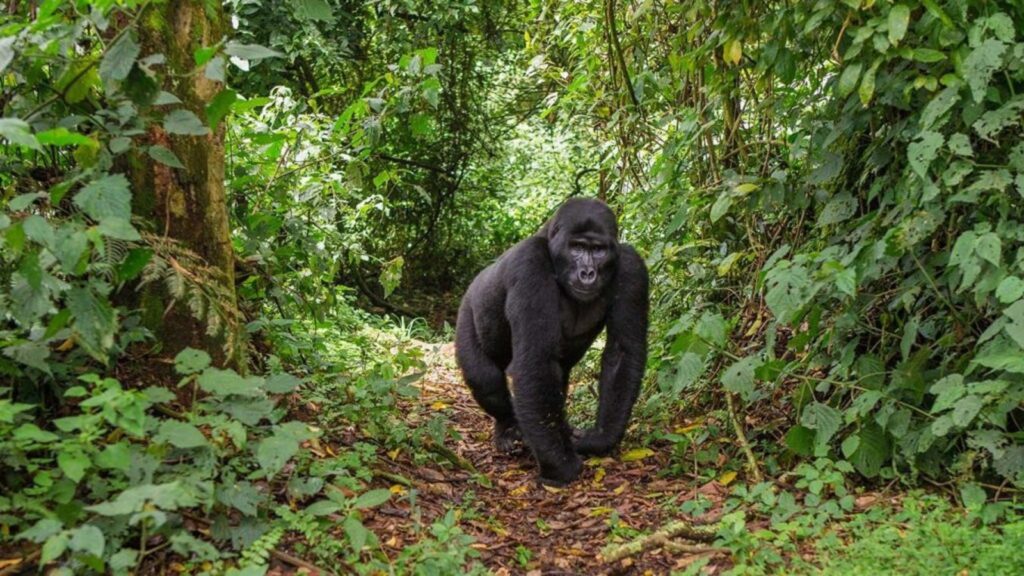
Silverback gorillas, the mature adult males of gorilla troops, typically weigh between 140–220 kg (300–485 lbs), with an average hovering around 170 kg for wild specimens, making them one of the heaviest primates on Earth.
Females, by contrast, are significantly lighter at 70–110 kg, roughly half the silverback’s mass, which underscores the sexual dimorphism essential for troop leadership and protection.
In captivity, silverback gorilla weight can skew higher—up to 250 kg or more—due to consistent food availability, veterinary care, and reduced physical exertion compared to their wild counterparts navigating steep volcanic slopes.
Key factors influence this variation: genetics play a role, with mountain gorillas often bulkier than lowland subspecies; age peaks weight in the prime 15-25 years; and environmental pressures like food scarcity in the Virunga Mountains trim wild averages to 159 kg per some studies.
Maximum recorded weights reach 220 kg for exceptional silverbacks, like those habituated for tourism in Rwanda’s Volcanoes National Park, where rangers note individuals pushing 485 lbs on scales during health checks.
-
Average wild silverback: 140-190 kg (310-420 lbs)
-
Maximum wild: 220 kg (485 lbs)
-
Captive average: 180-250 kg (397-551 lbs)
-
Females (all ages): 70-110 kg (154-243 lbs)
These stats highlight why silverback gorilla weight fascinates—it’s not just size but functional mass for survival, from charging intruders to foraging across misty highlands.
For safari planners eyeing gorilla trekking Uganda, knowing these benchmarks helps set expectations for encountering these behemoths up close.
Silverback Gorilla Weight by Age
Silverback gorilla weight evolves dramatically from infancy to maturity, reflecting rapid growth tailored to their forest lifestyle. Infants start at a mere 1.5–2 kg at birth, clinging to mothers for 3-4 years while nursing and nibbling vegetation, doubling in size by year one to 4-5 kg.
Juveniles (4-7 years) surge to 30-50 kg, developing agility for play-fighting that builds muscle foundational to future dominance.
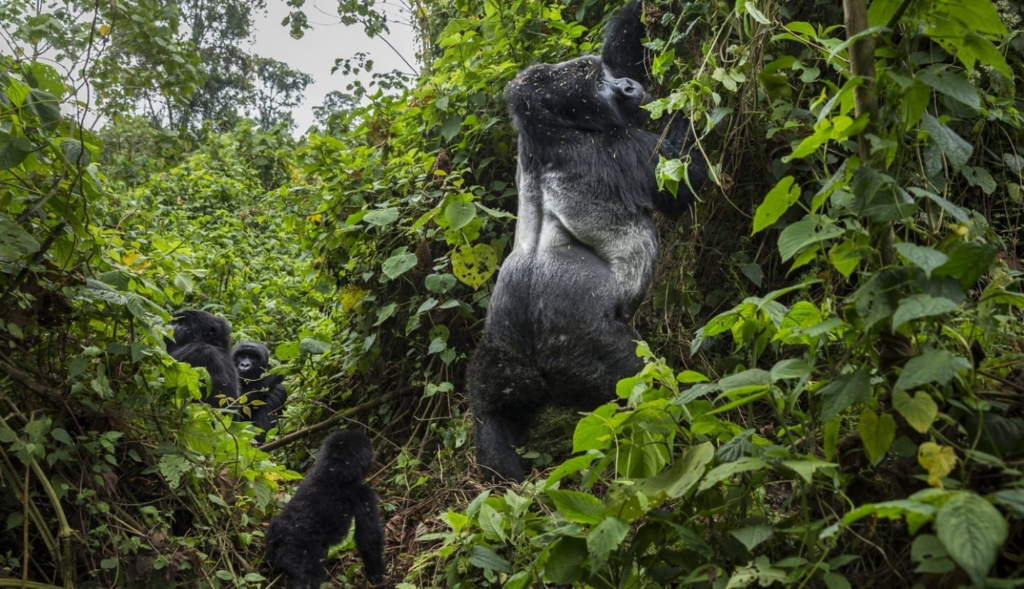
Adulthood hits around age 8-12, when males sprout the signature silver saddle of back hair, weighing 100-140 kg initially as blackbacks before peaking as full silverbacks at 170-220 kg by 15 years.
Mature silverbacks, 20+ years old, maintain or slightly lose mass due to leadership stresses, stabilizing at 160-200 kg. This growth timeline spans 15-20 years of acceleration, fueled by high-calorie foliage.
-
Infant (0-3 years): 1.5-20 kg
-
Juvenile (4-7 years): 30-50 kg
-
Subadult/Blackback (8-12 years): 100-140 kg
-
Adult Silverback (13-25 years): 170-220 kg
-
Mature (25+ years): 160-200 kg
Tracking this progression during Bwindi gorilla trekking reveals troop dynamics—youngsters dwarfed by the silverback’s imposing frame—emphasizing conservation needs to protect growth cycles amid habitat threats.
Silverback Gorilla Weight Comparison – Gorilla vs Human vs Animals
Comparing silverback gorilla weight to humans and other animals underscores their primate supremacy.
An average adult human male weighs 80-90 kg, paling against a silverback’s 170 kg average—over twice the mass, packed into a 1.7m hunched frame versus man’s upright 1.75m.
Versus a lion (150-190 kg male), silverbacks match or exceed on land, though lions edge in speed; chimpanzees tip 40-60 kg, making gorillas 3-4x heavier kin.
This table highlights why myths of gorilla-lion clashes persist, but in reality, silverbacks avoid such foes through forest seclusion.
These contrasts fuel fascination, driving searches for silverback gorilla weight and trekking tours where visitors witness this scale in person.
Why Are Silverback Gorillas So Heavy?
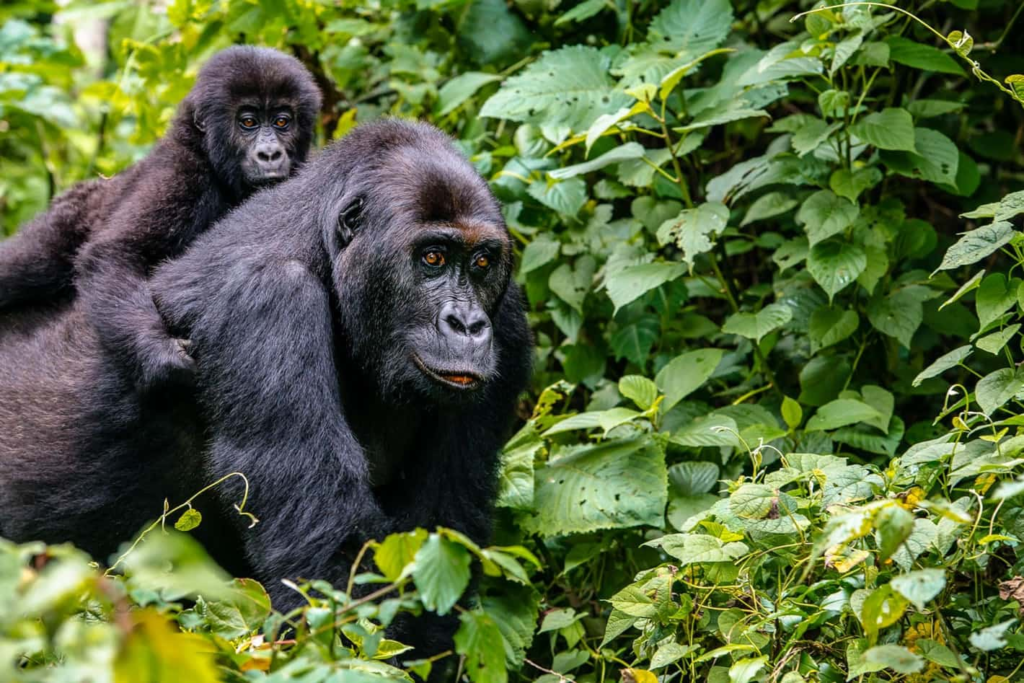
Silverback gorillas boast extraordinary heft due to muscle density 2-3 times greater than humans, with fast-twitch fibers enabling explosive power for displays and defense without excess fat.
Their robust bone structure—thicker scapulas and femurs—supports 170+ kg on knuckles, evolved for arboreal ancestors now ground-pounders in montane forests.
A herbivorous diet of fibrous leaves, shoots, and fruits provides efficient energy: daily 18-34 kg intake ferments in a massive gut, yielding proteins via hindgut bacteria unmatched by carnivores.
This combo—myosin-heavy muscles, dense skeletons, and caloric foliage—packs 485 lbs max efficiently, far beyond human gym gains.
Environmental adaptation in cold highlands adds insulating bulk, vital for Bwindi’s chill. Understanding this explains their gentle demeanor belying power, drawing eco-tourists to ethical gorilla safaris Rwanda.
Strength vs Weight – How Powerful Is a Gorilla?
Silverback gorilla weight translates to phenomenal strength, estimated at 4-10 times a human’s per body mass, bending steel bars or uprooting saplings with ease.
Lifting capacity nears 800 kg (1,760 lbs) in bursts—think deadlifting a motorcycle—rooted in that 170 kg frame’s leverage and fiber recruitment. Bite force crushes at 1,300 PSI, dwarfing a human’s 162 PSI, shredding bamboo like paper.
Connected directly: heavier silverbacks generate superior force vectors, as seen in charges covering 40 km/h.
Myths inflate to “20 men,” but benchmarks show one gorilla equaling 6-10 average males. This prowess protects troops, making silverback encounters on Uganda treks thrilling yet safe under ranger rules.
Differences Between Gorilla Subspecies
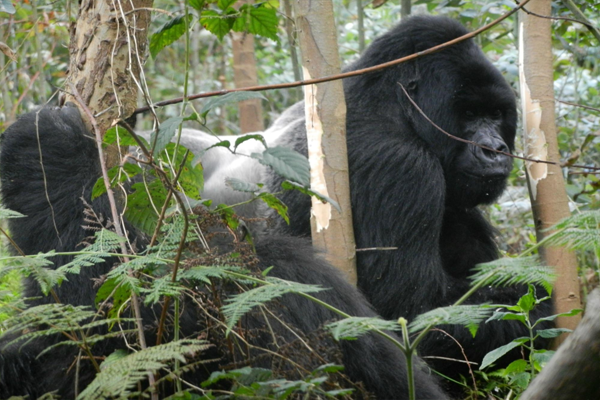
Mountain silverback gorillas—your trekking stars—are heavier and bulkier at 170-220 kg, adapted to high-altitude chill with longer fur and denser builds for Virunga/Bwindi life.
Western lowland silverbacks, conversely, average 140-180 kg, slimmer for swampy equatorial forests, lighter fur suiting warmth.
-
Mountain: 195 cm chest, stockier limbs; endangered icons.
-
Western Lowland: More arboreal, 10-20% lighter.
Diet and Its Impact on Gorilla Weight
Silverback gorilla weight thrives on a diet of leaves (50%), stems, fruits, and bark, consuming 18-34 kg daily—equal to their body weight in volume thanks to efficient fermentation.
High-fiber intake (85% of calories) sustains bulk without processing overload, with favorites like wild celery providing minerals for bone density. Seasonal fruit boosts condition, explaining weight peaks.
This vegan powerhouse fuels 220 kg frames, proving plants power giants—ideal hook for sustainable gorilla trekking promoting habitat preservation.
Where Do Silverback Gorillas Live?
Silverback gorillas inhabit the Democratic Republic of Congo’s Virunga National Park, Rwanda’s Volcanoes NP, and Uganda’s Bwindi Impenetrable and Mgahinga parks—mist-shrouded afromontane forests at 2,000-4,000m.
Bwindi hosts ~400, Uganda’s trekking hub; Volcanoes ~500, Rwanda’s premiere site. Bwindi Gorilla Safaris for itineraries amid 340+ bird species.
These UNESCO spots safeguard ~1,000 mountain gorillas, where silverbacks roam bamboo thickets.
Can You See Silverback Gorillas in the Wild?
Spot silverback gorillas via permitted gorilla trekking—hour-long hikes to habituated troops for 1-hour views, led by rangers in Uganda/Rwanda.
Close encounters (7m rule) reveal their weight in motion: chest-beating, foraging. Conservation mandates minimize impact, funding patrols.
Interesting Facts About Gorilla Weight
-
Heaviest recorded: “Gargantua” at 280 kg captive; wild max ~220 kg.
-
Arm span: 2.6m, leveraging weight for brachiation.
-
Silverbacks gain dominance via size, leading 10-30 members.
These tidbits amplify silverback gorilla weight allure.
Frequently Asked Questions
How much does a silverback gorilla weigh in kg?
140-220 kg average, up to 250 kg captive.
Is a gorilla heavier than a human?
Yes, 2x+ an average male.
How strong is a silverback gorilla?
4-10x human strength.
What is the heaviest gorilla ever recorded?
~280 kg (captive).
Do gorillas weigh more than lions?
Comparable; silverbacks match top males.
Conclusion
Silverback gorilla weight—140-220 kg of muscle—embodies nature’s engineering, from age-driven growth to herbivore-fueled might outpacing humans and rivals. Their power protects endangered troops amid habitat woes, but conservation via tourism sustains them.
Book your gorilla trekking safari in Uganda or Rwanda today—witness a silverback’s majesty, boost impressions, and drive real impact. Book Now for unforgettable adventures!